
Riley Puckett and Gid Tanner Recordings and The Birth of Old-Time Music on Record
In late 1923 and early 1924, OKeh Records released the first recordings by Fiddlin’ John Carson. These became surprise hits. Columbia Records quickly recognized the demand for rural white musicians, a market they had already tapped with their successful blues releases.
Columbia sent talent scouts to the South, focusing on Atlanta, where radio station WSB had been broadcasting live performances since 1922. They sought out guitarists and fiddlers from local conventions. Two of the most popular musicians were soon on a train to New York City. Columbia paid them a minimal fee per song, but the result was historic.
Riley Puckett and Gid Tanner Recordings –Riley Puckett’s First Recording Session – March 7, 1924
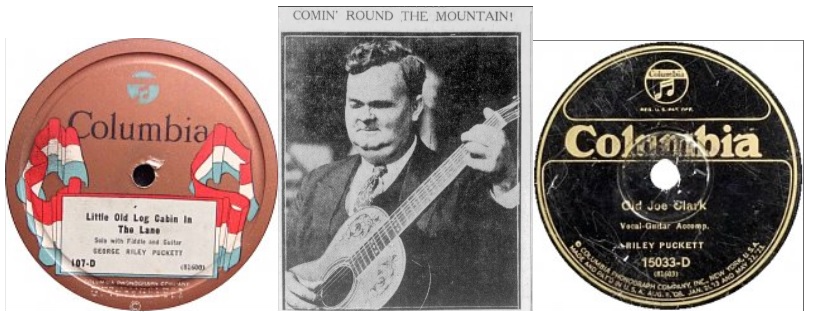
On March 7, 1924—100 years ago today—blind guitarist George Riley Puckett stepped up to the recording horn. He played and sang five songs, including “Little Old Log Cabin in the Lane.” Columbia likely intended this recording to capitalize on the success of Fiddlin’ John Carson’s version, released a few months earlier on OKeh.
Puckett was already well known in Atlanta. Before 1920, a local newspaper had reported on a busking permit issue involving him. By 1922, he had become a favorite on WSB radio, where he played parlor songs, Tin Pan Alley tunes, Vaudeville numbers, minstrel songs, folk tunes, and hillbilly music. He was a skilled guitarist, famous for his bass runs in string band music, and competent on the banjo, though he likely didn’t bring one to New York for this session.
Gid Tanner: The Showman of Old-Time Music
Fiddler Gid Tanner accompanied Puckett on this historic recording. He added minimal fiddle backing and performed hound dog sound effects on “Cabin” and the first-ever recording of the murder ballad “Knoxville Girl.” Unfortunately, Columbia never released “Knoxville Girl.”
Puckett recorded three more songs that day—“Casey Jones,” “Johnson’s Old Grey Mule,” and “Old Joe Clark.” He played these solo with just his guitar. Columbia initially credited him as “George Riley Puckett” on record labels, but later pressings used the shorter “Riley Puckett.”
Over the two-day session, Puckett recorded 11 solo tracks. He and Gid Tanner also recorded four duets. Puckett quickly became one of folk and old-time country music’s first superstars. By 1941, he had recorded more than 350 songs under his own name and appeared on many more with the Skillet Lickers and other Columbia artists in Atlanta.
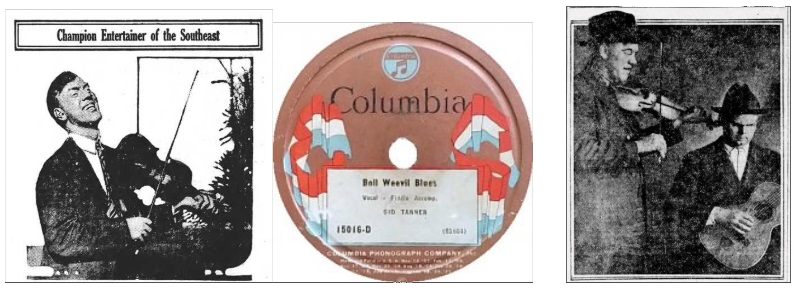
Gid Tanner may not have been Columbia’s most skilled fiddler, but he was solid and dependable. More importantly, he was a beloved entertainer. Known for his comedic showmanship, he frequently won popularity contests at fiddlers’ conventions. Atlanta newspapers often featured his performances in coverage of pre-1920 contests, highlighting his charisma.
Tanner’s fiddling was straightforward, but he brought more than just music to the stage. He could dance, create sound effects—like the hound dog sounds on Riley Puckett’s “Little Old Log Cabin in the Lane”—and sing in a hilarious falsetto when a female voice was needed. He reportedly knew hundreds of old-time songs.
On March 7, 1924, he backed Riley Puckett on a couple of songs before stepping up for two solo recordings: “Boll Weevil Blues” and “I’m Satisfied.” The next day, March 8, he and Puckett recorded four more tracks together. Columbia released these as a duo, marking the beginning of their historic collaboration.
Columbia released Riley Puckett’s first single before the end of March 1924. By late April, at least two more records had hit the market. By the end of the year, nine or ten records featuring Puckett and/or Gid Tanner were available at retail.
Sales were strong. In September 1924, Columbia brought Puckett and Tanner back to New York City for a follow-up session. This time, they recorded nearly 30 more tracks.
How Columbia and OKeh Marketed Old-Time Records
The success of Fiddlin’ John Carson and Henry Whitter on OKeh, along with Gid and Riley on Columbia, helped launch the old-time music genre. OKeh soon began marketing its releases as “Old Time Tune Records.” The term “old-time” had appeared on records before 1910, often describing Americana folk, violin reels, and minstrel songs performed by classically trained or metropolitan musicians.
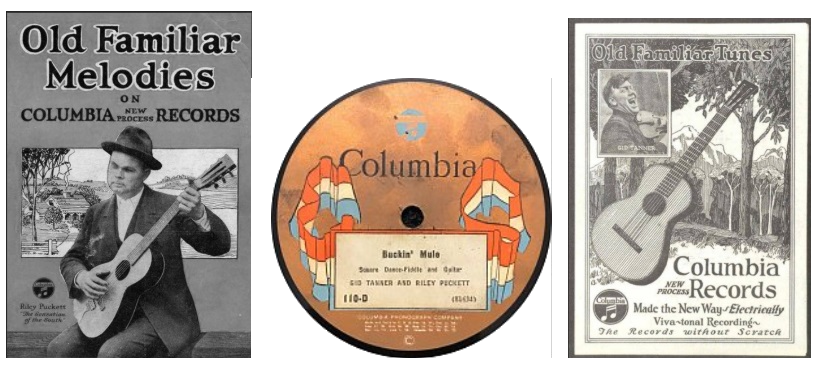
Columbia used similar branding. Advertisements for its early 1924 releases promoted the records as “Old Familiar Tunes” and “Old Familiar Melodies.” These marketing strategies helped establish old-time music as a commercial genre.
By the end of 1924, the old-time music boom was in full swing. Columbia and OKeh had recorded several more rural artists, while Edison, Victor, Vocalion, Brunswick, and Gennett had also entered the genre.
In 1925, as Columbia shifted most of its old-time recording sessions to Atlanta, Gid Tanner teamed up with banjo player Fate Norris. Together, they formed a string band and released one record under the name “Gid Tanner and His Georgia Boys.”
By 1926, that group evolved into the hillbilly supergroup Gid Tanner and His Skillet Lickers, bringing in more musicians and shaping the sound of early country music.
Upcoming Document Records Releases~
Riley Puckett and Gid Tanner Recordings
Stay tuned for two new Document Records releases this year! These volumes will present the complete 1924 recordings of Riley Puckett and Gid Tanner in chronological order. We’ll keep you updated!
Category: Amercan Old Time Music
Tags: