
Halloween Needle Drop: The Robins – That Old Black Magic (1956)
A little musical sorcery from Los Angeles, featuring the extraordinary voice of Grady Chapman
There are certain recordings that seem to possess a magic all of their own. They may not have been enormous hits, nor even the best-known versions of a particular song, yet something in the performance makes them quite irresistible.
For today's Halloween Needle Drop, we're travelling back to Los Angeles in 1956 and a wonderful recording of That Old Black Magic by the Robins, one of the most important and entertaining vocal groups to emerge from the post-war rhythm and blues scene.
The song itself is a classic, capable of lending itself to an astonishing variety of interpretations. Yet, for me, there is something quite exceptional about this particular performance. Grady Chapman's soaring tenor is simply heavenly. If I'm not careful, I can put the record on repeat and listen twenty times without tiring of it.
It is a performance full of exuberance, elegance and vocal daring, with just the right amount of theatrical mischief for our Halloween celebrations.
The Robins: Before There Were the Coasters
The story of the Robins is also part of the story of the birth of rock ’n’ roll.
Their origins stretch back to the late 1940s, when Ty Terrell Leonard, brothers Billy and Roy Richard, and Bobby Nunn established themselves on the West Coast vocal-group circuit. Initially known as the Bluebirds, and briefly the Four Bluebirds, they became the Robins in 1949.
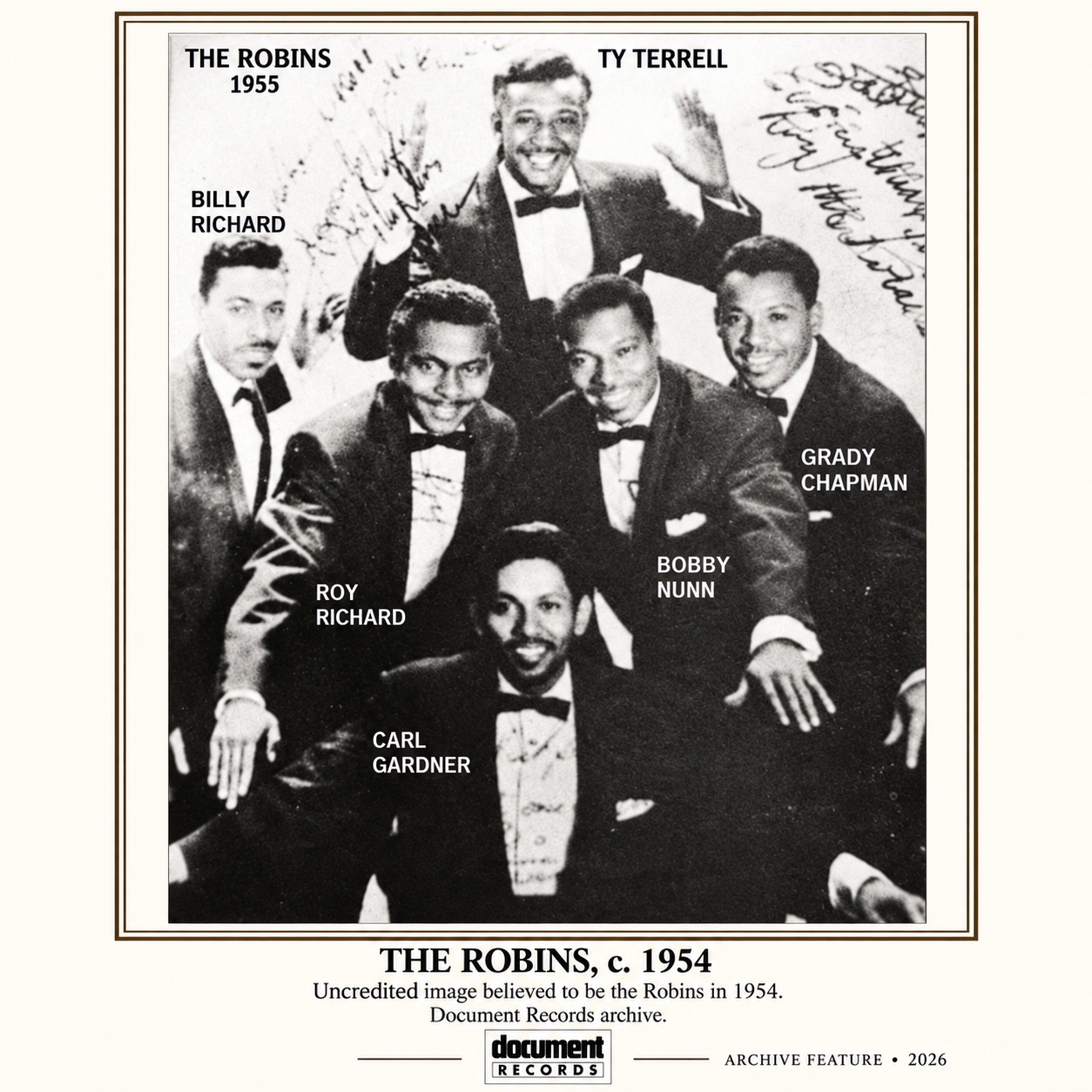
The group developed a distinctive combination of rhythm and blues, close vocal harmony, humour and theatrical storytelling. Their association with bandleader Johnny Otis brought them wider attention, and in 1950 they enjoyed an R&B hit with If It's So Baby, recorded for Savoy.
During the following years, the Robins recorded for several labels, including RCA Victor, before beginning their celebrated association with songwriters and producers Jerry Leiber and Mike Stoller.
In 1955, their recording of Smokey Joe's Cafe, issued on Leiber and Stoller's Spark label, became one of the defining early examples of the humorous, story-driven rhythm and blues that would soon help shape rock ’n’ roll.
It was also the recording that helped bring about a momentous change.
When Leiber and Stoller established a new working relationship with Atlantic Records, Carl Gardner and Bobby Nunn left the Robins to form the Coasters, alongside Leon Hughes and Billy Guy.
The Coasters would go on to enormous success with recordings such as Searchin', Yakety Yak, Charlie Brown and Poison Ivy.
The Robins, however, were far from finished.
Grady Chapman: The Voice Behind the Magic
Born in Greenville, South Carolina, on 1 October 1929, Grady Chapman joined the Robins in the early 1950s and brought a remarkable high tenor to their sound.
Chapman was a singer of considerable range and flexibility, equally capable of handling an emotional ballad, an exuberant rhythm and blues number or a sophisticated popular standard.
His arrival helped transform the group's vocal arrangements, adding an exciting new dimension to their already distinctive sound.
Although his membership was interrupted for a period during the mid-1950s, Chapman returned and became one of the principal voices of the Robins' later recordings.
Among his memorable performances were I Love Paris, Whadaya Want, Cherry Lips and, of course, That Old Black Magic.
There is a remarkable sense of freedom in his singing. He seems to glide effortlessly through the melody, reaching for the high notes with a confidence and lightness that makes the whole performance sound almost spontaneous.
It is that voice which, for me, makes this particular recording so special.
That Old Black Magic: A Song With a History
That Old Black Magic was written in 1942 by two giants of American popular songwriting: composer Harold Arlen and lyricist Johnny Mercer.
Arlen, whose extraordinary catalogue includes Over the Rainbow, Stormy Weather and Blues in the Night, was particularly gifted at blending sophisticated popular songwriting with the musical language of jazz and blues.
Mercer supplied the wonderfully imaginative lyrics, turning romantic attraction into something resembling an irresistible supernatural spell.
The song was introduced in the 1942 film Star Spangled Rhythm and quickly became a popular standard.
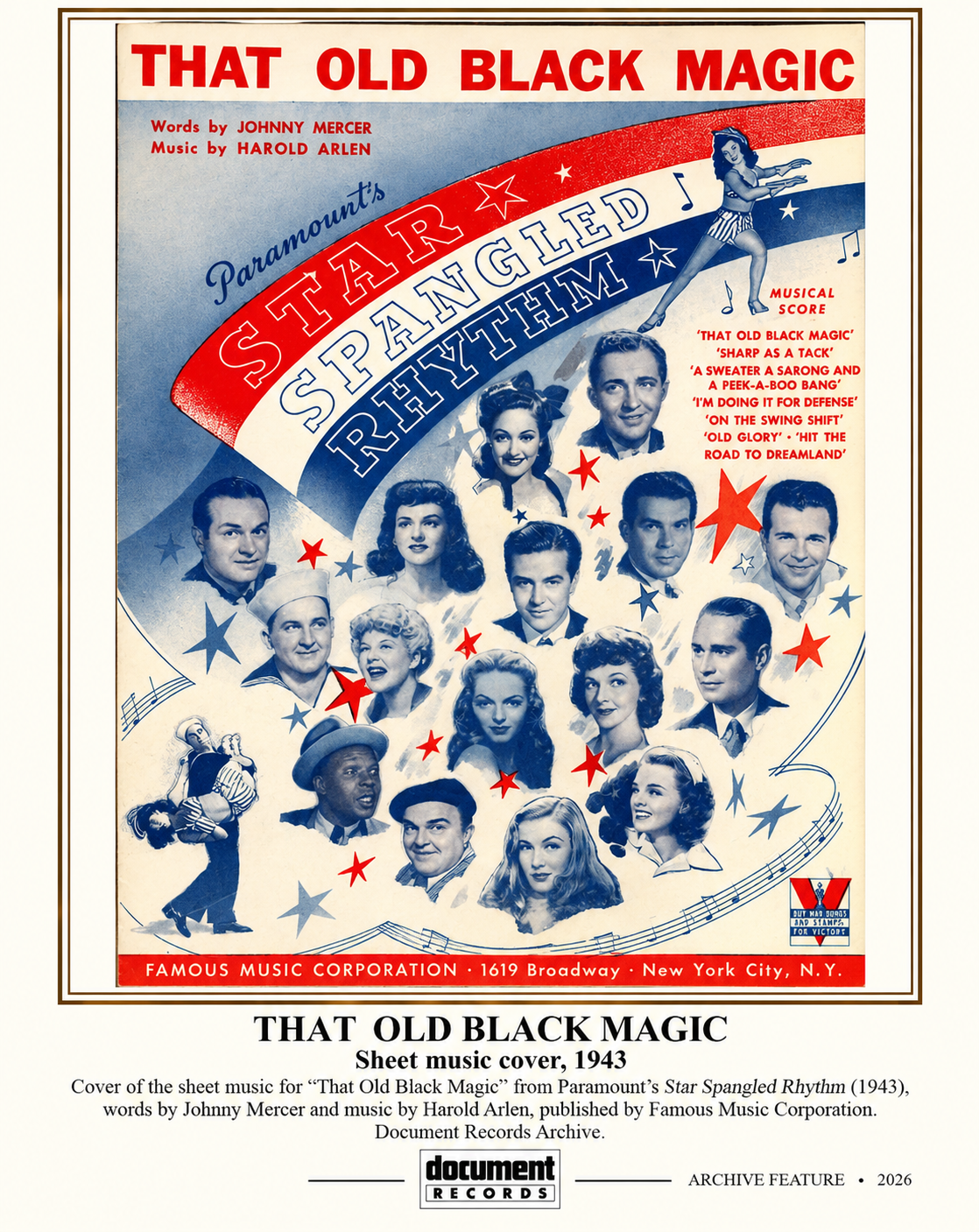
Over the years, it attracted performances from an extraordinary range of singers and musicians, including Glenn Miller, Frank Sinatra, Ella Fitzgerald and Louis Prima with Keely Smith.
It is one of those rare compositions that seems capable of surviving almost any treatment, from elegant orchestral ballad to swinging jazz performance.
The Robins approached it with the exuberance and vocal imagination of 1950s rhythm and blues.
The 1956 Whippet Recording
Following the departure of Gardner and Nunn, the remaining Robins continued recording, signing with Gene Norman's Hollywood-based Whippet label, part of his Gene Norman Presents enterprise.
By this period, the group included Grady Chapman, Ty Terrell Leonard, Billy and Roy Richard, and the talented young musician H. B. Barnum.
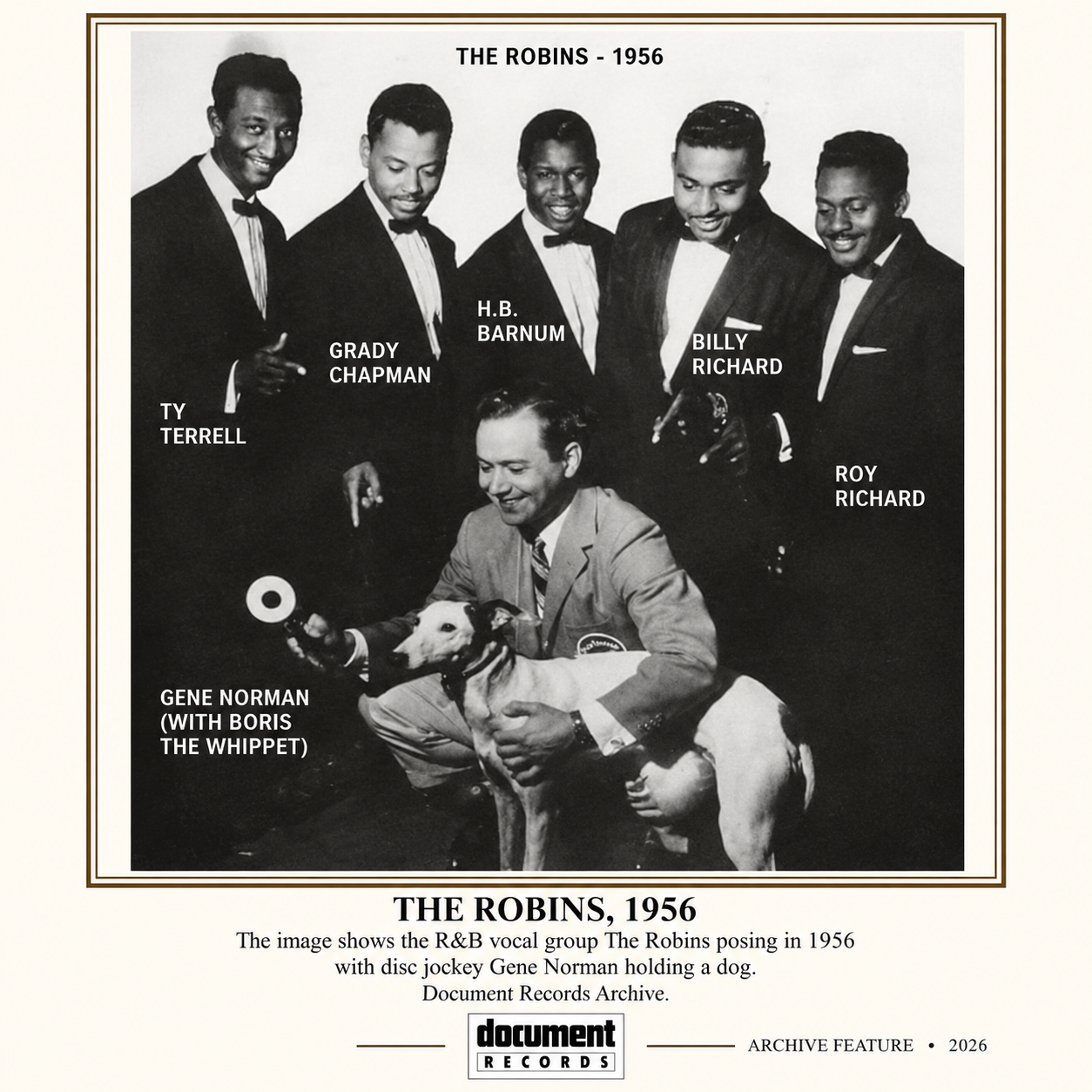
Barnum would subsequently establish an extraordinary career as an arranger, composer, conductor and producer, working with many of the leading names in American popular music.
The Robins recorded That Old Black Magic during the spring of 1956, with Chapman taking the lead vocal.
The recording was issued in October that year, coupled with Barnum's composition Since I First Met You.
The original Whippet 45 rpm single, catalogue W-203X, is a particularly appealing example of the group's ability to combine polished vocal harmonies with infectious rhythm and a considerable sense of fun.
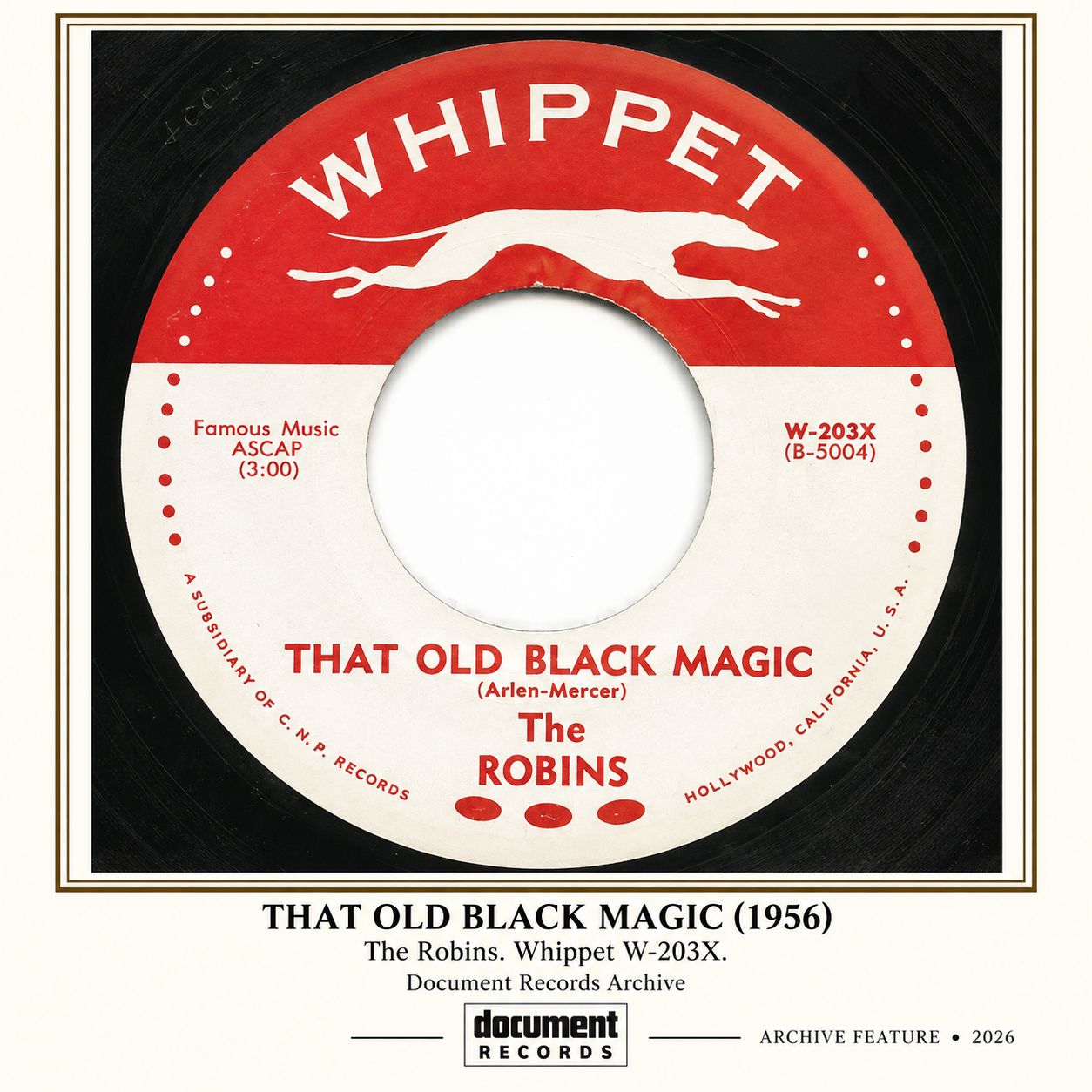
The arrangement allows Chapman's high tenor to soar above the supporting voices, while the instrumental accompaniment gives the performance its wonderfully buoyant momentum.
The result is neither a straightforward pop ballad nor a conventional doo-wop recording. It occupies that delightful territory where jazz, rhythm and blues, vocal-group harmony and early rock ’n’ roll meet.
What the Critics Thought in 1956
The record was reviewed in the 3 November 1956 edition of Cash Box, the American music-industry trade magazine.
The reviewer recognised the appeal of the Robins' interpretation of an established standard and suggested that the recording might attract listeners in more than one market.
The reverse side, Since I First Met You, was also favourably received as an appealing romantic number.
It is fascinating to read contemporary reviews such as these. They remind us that the Robins were not simply a footnote in the history of the Coasters, but a working, recording and performing group with their own musical identity and ambitions.
A Little Mystery About the Arrangement
There is an intriguing story associated with the Robins' version of That Old Black Magic.
Louis Prima and Keely Smith would enjoy considerable success with their own lively interpretation of the song in 1958.
According to recollections documented by vocal-group historian Marv Goldberg, members of the Robins believed that Prima had seen them perform the number in Las Vegas and had subsequently drawn inspiration from their arrangement.
Goldberg himself expressed reservations about the story, and there is no firm evidence establishing that Prima borrowed the group's treatment.
Nevertheless, it is an interesting piece of musical folklore, illustrating how arrangements, performance styles and musical ideas circulated among entertainers during the 1950s.
Whatever the truth of the matter, the Robins' 1956 recording stands very comfortably on its own merits.
Grady Chapman: A Voice Remembered
Grady Chapman continued recording after his time with the Robins, making solo records and later appearing with various incarnations of the Coasters.
He died on 4 January 2011, aged 81.
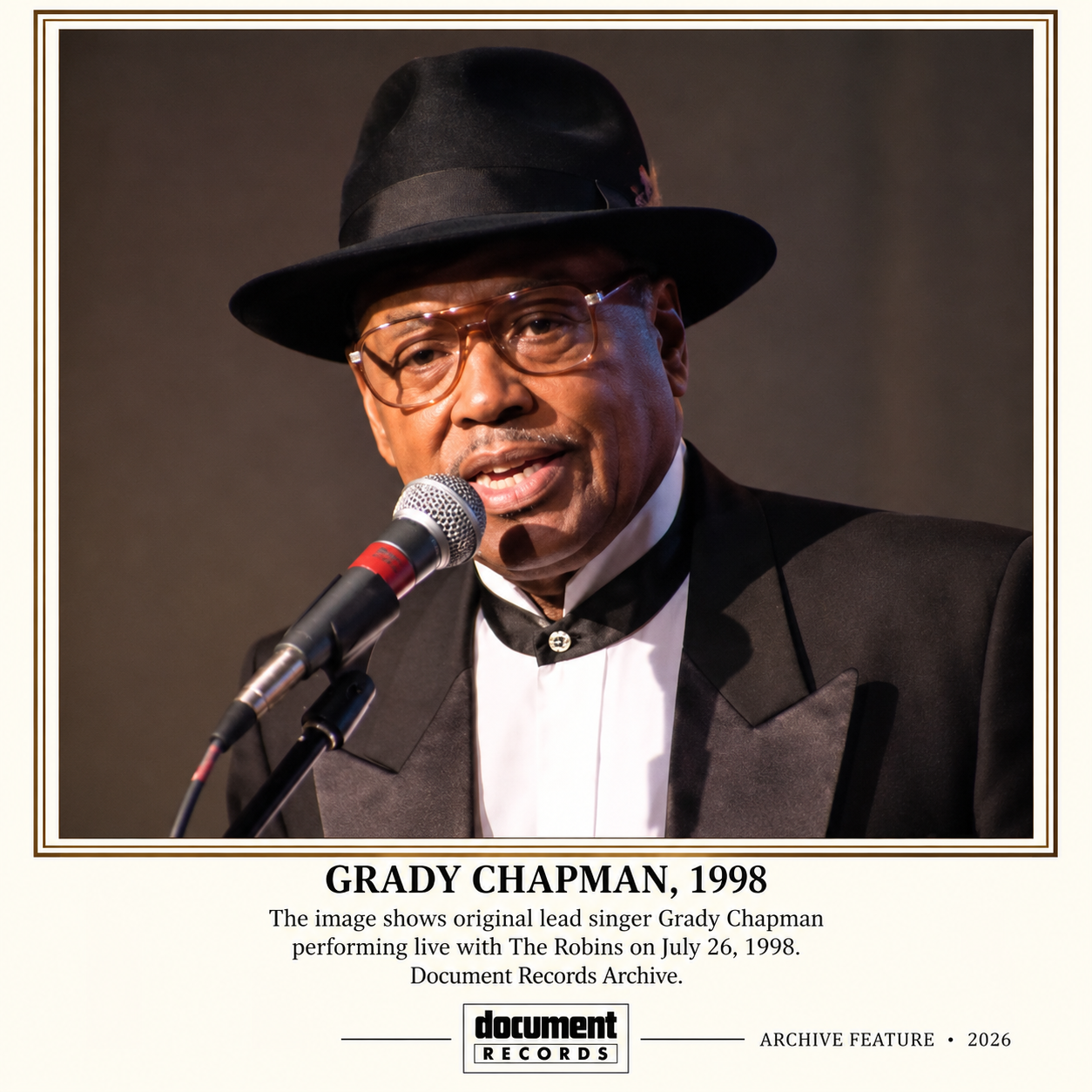
One of the loveliest things about rediscovering these recordings today is discovering how much the music continues to mean to those who knew the performers personally.
Beneath a YouTube presentation of That Old Black Magic, a commenter using the name Chad Chapman wrote:
My Dad's voice still sends chills through me. Miss you Pops.
Another contributor recalled knowing Grady during performances by the Coasters in Anaheim in the late 1990s and early 2000s. He remembered their conversations, Grady's kindness, and even a family kitten named after Smokey Joe's Cafe.
A later reply from another family member thanked him for sharing those memories, explaining how such recollections helped keep their father's music alive.
These are personal recollections rather than independently verified biographical evidence, but they are touching reminders that behind every vintage recording was a living, breathing individual whose music and personality mattered to the people around them.
It is all too easy, when researching historic recordings, to become absorbed in catalogue numbers, matrix details, recording dates and personnel lists.
All of those things matter enormously, particularly to those of us working to preserve and document this music.
Yet occasionally, a simple comment from a son remembering his father's voice brings us back to something even more important.
The human being behind the recording.
Today's Halloween Needle Drop
For this October's Halloween Needle Drop, I could hardly resist choosing a song with such an irresistible title.
There are no ghosts, graveyards or midnight apparitions here. The magic is romantic rather than supernatural, although Grady Chapman's remarkable voice certainly seems to defy gravity at times.
This is one of those recordings that makes me stop whatever I am doing and listen.
Perhaps it is the extraordinary high tenor, perhaps the harmonies, or perhaps simply the sheer pleasure the musicians seem to take in the performance.
Whatever the explanation, it has a charm that refuses to fade.
Seventy years after its release, the Robins' That Old Black Magic still casts a spell.
And, as far as I'm concerned, it is a spell well worth falling under.
Happy Halloween from Document Records and Blue Century Records.

Original Record Details
The Robins – That Old Black Magic / Since I First Met You
- Label: Whippet Records, W-203X
- Country: United States
- Released: October 1956
- Format: 7-inch, 45 rpm single; also issued on 78 rpm as Whippet W-203
- A-side: That Old Black Magic — Harold Arlen / Johnny Mercer — 3:00
- B-side: Since I First Met You — H. B. Barnum — 2:20
- A-side matrix: B-5004
- B-side matrix: B-5011
- Publishers: Famous Music (A-side); Lanor Music, Inc. (B-side)
- Lead vocal on both sides: Grady Chapman
Research and Further Reading
Marv Goldberg, The Robins, R&B Notebooks
https://www.uncamarvy.com/Robins/robins.html
Cash Box, 3 November 1956, contemporary review of Whippet 203X
https://www.worldradiohistory.com/Archive-All-Music/Cash-Box/50s/1956/CB-1956-11-03.pdf
From the Vaults, Grady Chapman birthday retrospective, 1 October 2026
https://fromthevaults-boppinbob.blogspot.com/2026/10/grady-chapman-born-october-1-1929.html
Grady Chapman biographical overview
https://en.wikipedia.org/wiki/Grady_Chapman
That Old Black Magic, composition and recording history
https://en.wikipedia.org/wiki/That_Old_Black_Magic
YouTube performance and listeners' recollections