
A hundred years ago, Elizabeth Smith broke a looking glass.
At least, that’s how she tells it.
From that moment everything begins to go wrong. Her children give her sass. She stubs her toe against the kitchen door. Her hens stop laying. She makes the mistake of sitting in the thirteenth row at church and, right on cue, her landlord tells her she has to go.
Elizabeth concludes that there isn’t much point shedding tears about it. She’s going to have bad luck for seven years.
Almost exactly a century later, that wonderfully peculiar little performance has come back to life on our Halloween collection, Unlucky 13 Blues – Bad Luck & Superstitions in the Blues.
And when we dropped the needle on it again, we began wondering about the woman behind that voice.
Who was Elizabeth Smith?
That apparently simple question sent us into the recording studios, nightclubs and vaudeville world of 1920s New York — and introduced us to a remarkable cast of musicians, songwriters and entertainers along the way.
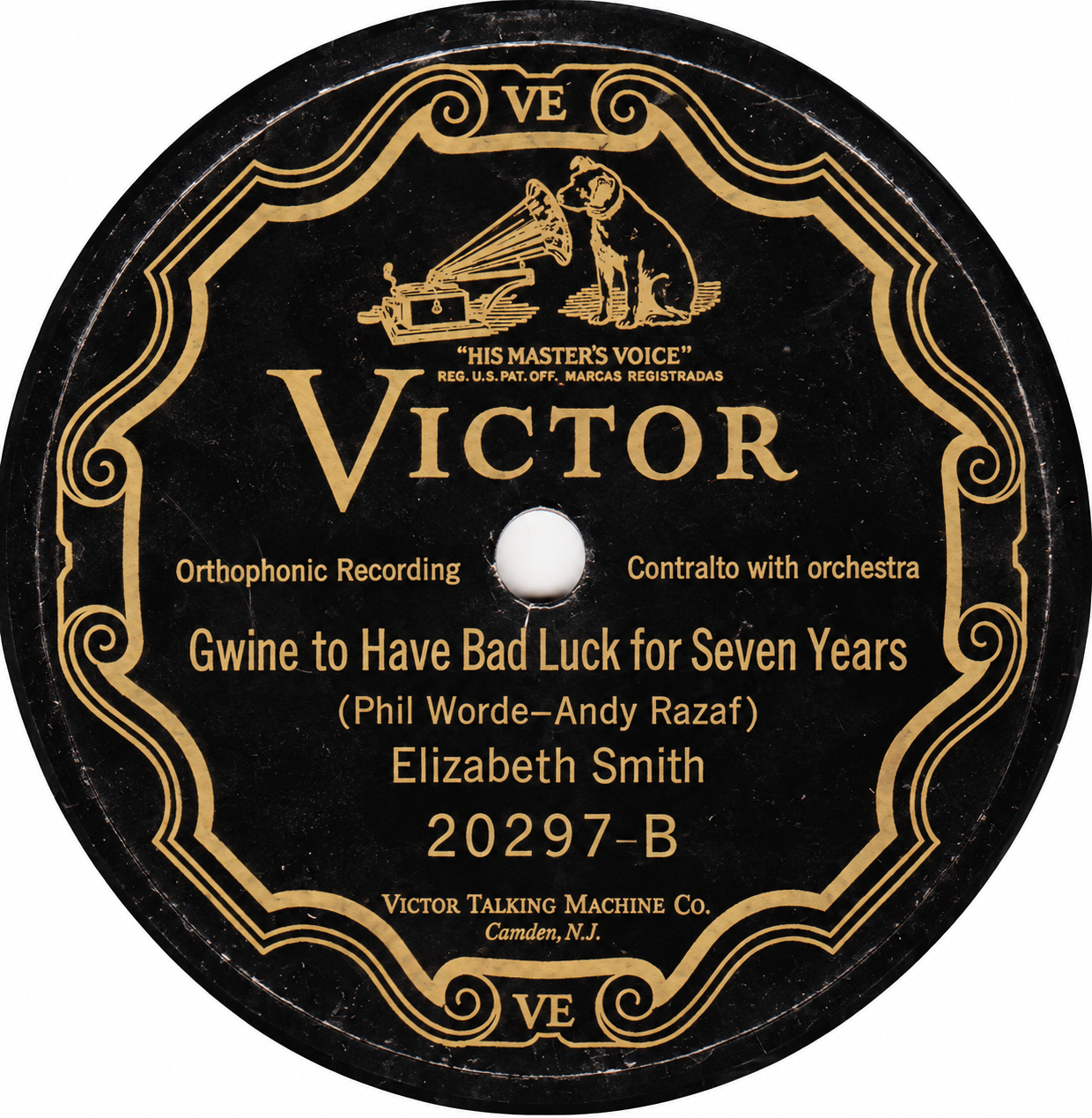
Listen to Elizabeth
The first surprise comes from simply listening to the record.
Victor described Gwine Have Bad Luck For Seven Years as a blues, and technically that is what it was sold as. But Elizabeth doesn’t sound to us like a woman solemnly delivering her troubles. There is an entertainer at work.
She complains, exaggerates and almost seems to revel in the mounting absurdity of her misfortunes. The accompaniment plods sympathetically behind her and the horns occasionally seem to answer her predicament. By the time she reaches the conclusion that seven years of bad luck are inevitable, the effect is funny as well as bluesy.
That distinction matters, because very little biographical information about Elizabeth Smith has survived. When the paper trail is thin, the records themselves become part of the evidence. And these records suggest that describing her simply as a “blues singer” may tell us only part of the story.
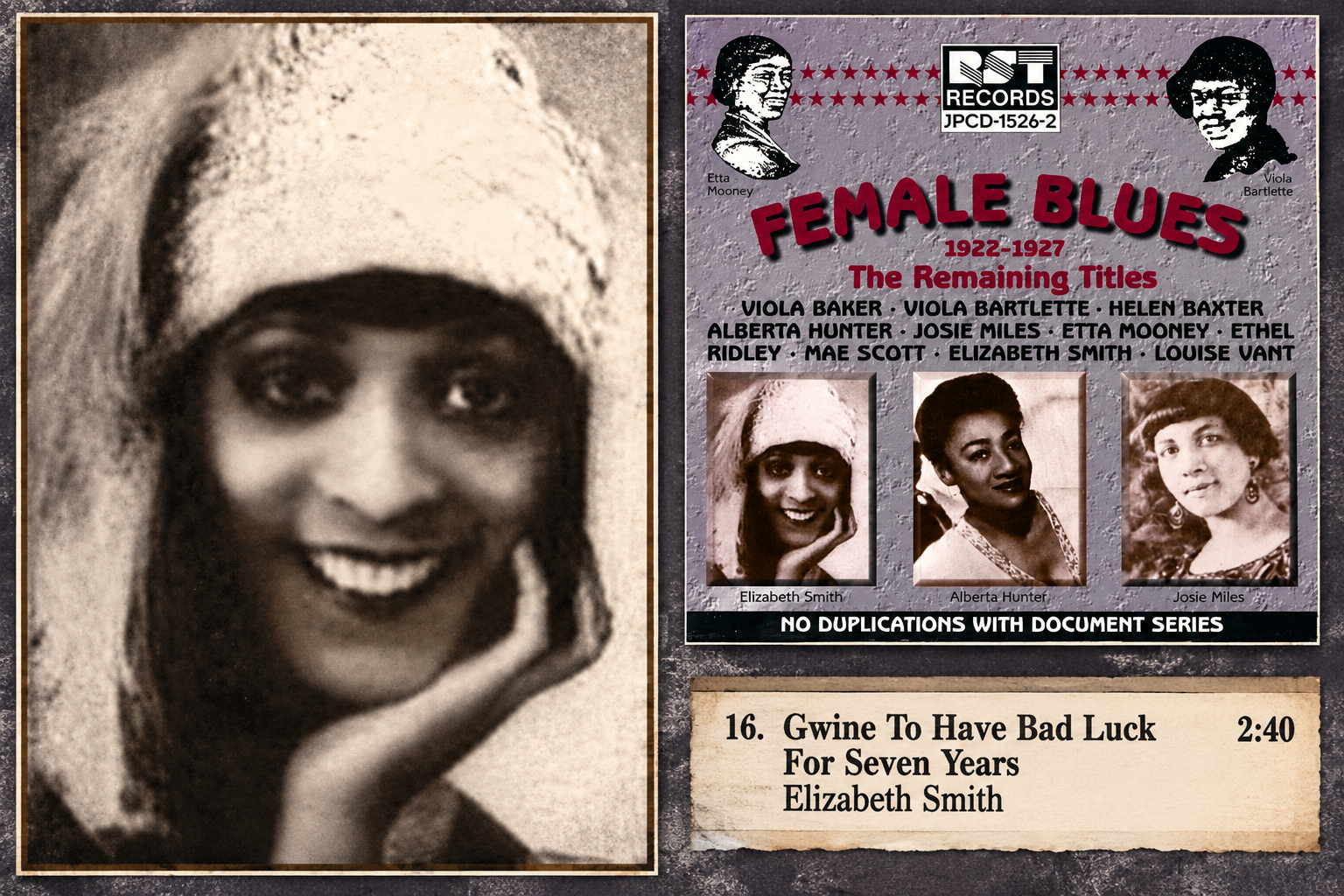
The photograph above brings us to another of the difficulties surrounding Elizabeth. It appeared on the RST release in the 1990s and identifies the woman as Elizabeth Smith, but the original source of the photograph was not given. We have therefore used it here as the image by which Elizabeth was identified on that release, rather than claiming an independently established provenance for the portrait.
That may seem over-cautious, but with an artist this obscure, small uncertainties have a habit of turning into “facts” simply because they have been repeated often enough. We would rather leave the question mark where it belongs.
A Victor session in September 1926
What we can establish securely is that Elizabeth Smith entered Victor’s New York recording operation on 6 September 1926.
She made two sides that day. The first was No Sooner, written by Sidney Easton, on which Elizabeth accompanied herself on ukulele. The second was Gwine Have Bad Luck For Seven Years. Both were issued on Victor 20297. Victor’s discographical records identify the issued performances as take 2.
The credits on Gwine immediately bring some formidable names into Elizabeth’s little story. The words were by Andy Razaf, the lyricist who would become associated with such songs as Ain’t Misbehavin’ and Honeysuckle Rose. The music was by pianist and composer Phil Worde.
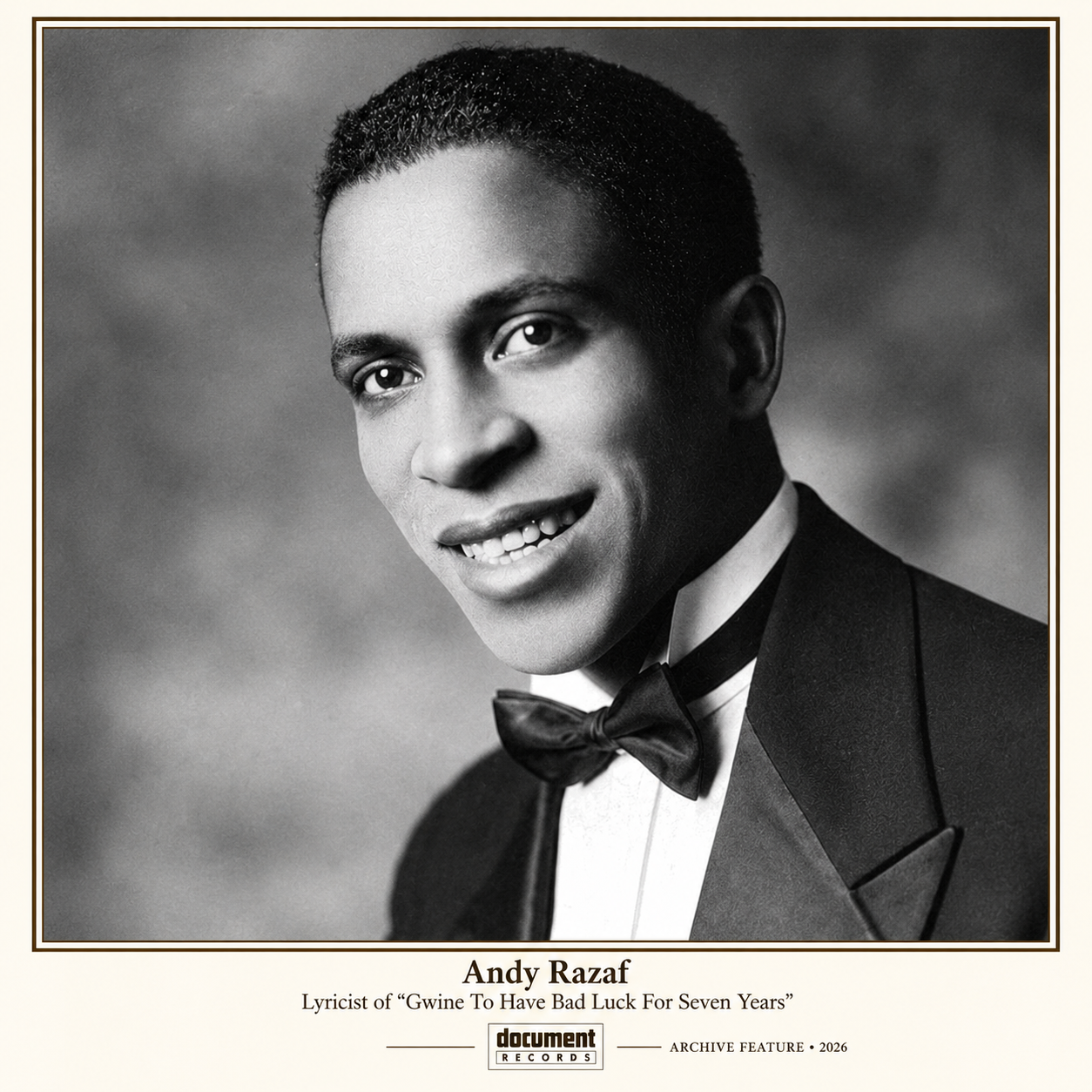
The Victor documentation describes the accompaniment as clarinet, cornet and piano. Identifying the actual musicians is less straightforward. Older discographical work has generally given Thomas Morris on cornet, Bob Fuller on clarinet and Mike Jackson on piano. More recent stylistic research by the Harlem-Fuss discographical project agrees about Morris and Jackson but argues that the clarinettist sounds like Happy Caldwell rather than Bob Fuller. That remains an identification based on musical evidence rather than something settled by Victor’s paperwork.
Another familiar name appears in Victor’s recording information: Ralph Sylvester Peer, later famously associated with the 1927 Bristol Sessions, supervised the session. Elizabeth Smith’s brief recording career was touching some surprisingly important corners of the American music business.
Mike Jackson and the road to Victor
The pianist Mike Jackson may be particularly important.
Jackson was already an established pianist and songwriter in the New York blues and jazz world. A contemporary report by Billy Jones, subsequently preserved in Storyville and quoted in later discographical research, stated that Jackson had “placed Elizabeth Smith with the Victor people”. If that report is accurate, Jackson may have been the person who helped get Elizabeth through Victor’s door in the first place.
The same report contains an even more tantalising claim: that Elizabeth had recorded a Mike Jackson composition called Honey That The Bee Forgot and was also broadcasting it. No such Elizabeth Smith recording appears in the established discography we have been able to trace.
Was it recorded and never issued? Was the report mistaken? Was it broadcast but never commercially recorded? At present we simply don’t know.
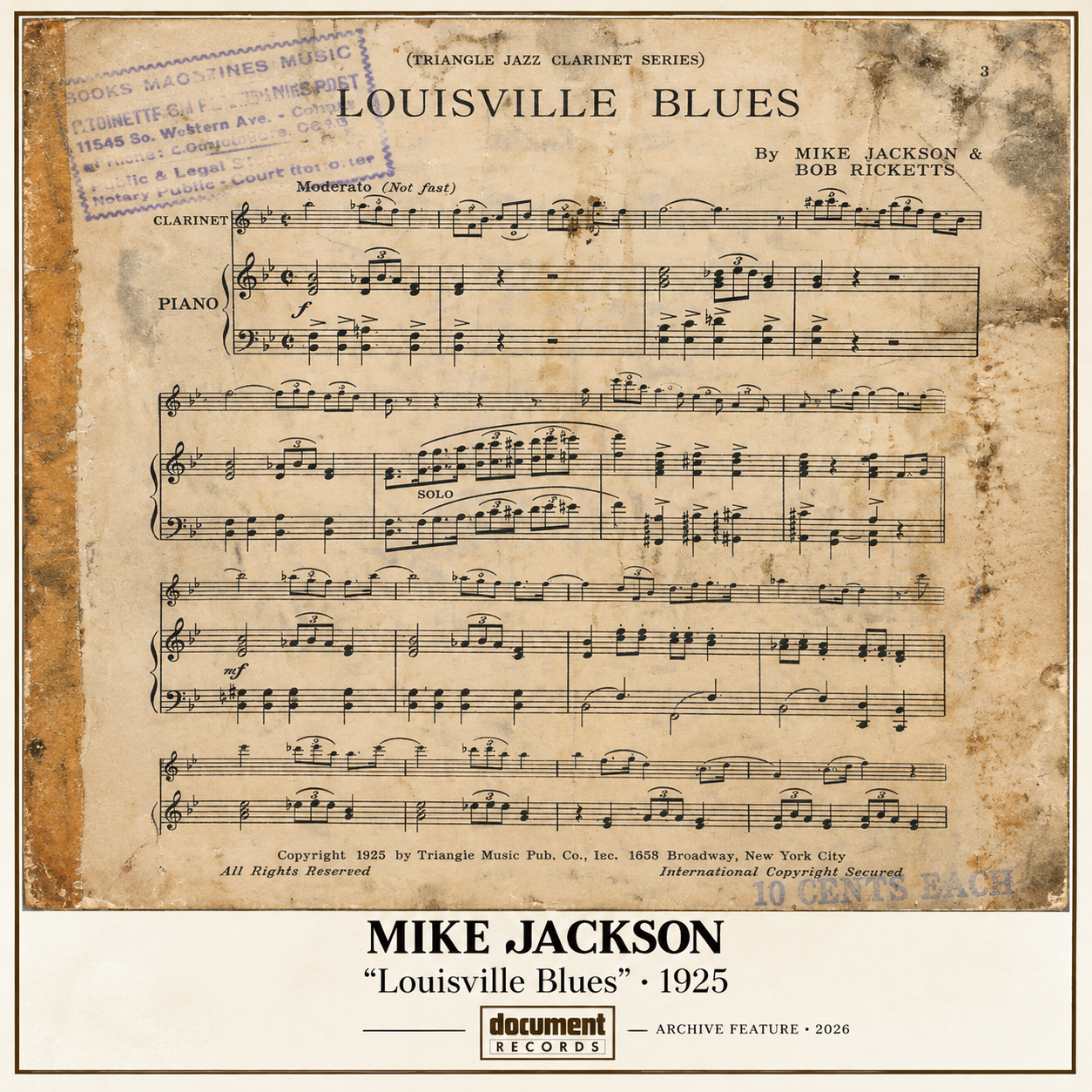
The sheet music above has no direct connection with Elizabeth, but it gives us something tangible from Jackson’s working life at almost exactly the right moment — a composition published in 1925, the year before Elizabeth appeared at Victor.
And then the paper trail takes us out of the recording studio and into Harlem.
Elizabeth Smith goes out into the Harlem night
Less than a month after the Victor session, Elizabeth’s name turns up somewhere rather wonderful.
In its issue of 2 October 1926, The New Yorker took readers on a tour of Harlem nightlife. At Club Bamville, 65 West 129th Street, the writer found “Elizabeth Smith and Joe Willis” among the entertainers who appeared at intervals between dances throughout the night.
Suddenly Elizabeth isn’t merely a name printed on a Victor label. She is a working Harlem entertainer.
We should be careful about going further than the evidence allows. The article describes Elizabeth Smith and Joe Willis as entertainers at Bamville, but the wording does not safely establish everything we might like to know about their professional relationship or Elizabeth’s earlier engagements. Nevertheless, the identification places her in precisely the sort of performance world that the records themselves had already made us suspect.
Club Bamville belonged to Harlem’s thriving late-night culture of dancing, music and floor entertainment. Performers might work the clubs, theatres and vaudeville stages and then turn up in recording studios during the day. The borders between “blues singer”, comedian, dancer, instrumentalist and vaudeville entertainer could be far less tidy than modern record catalogues make them appear.
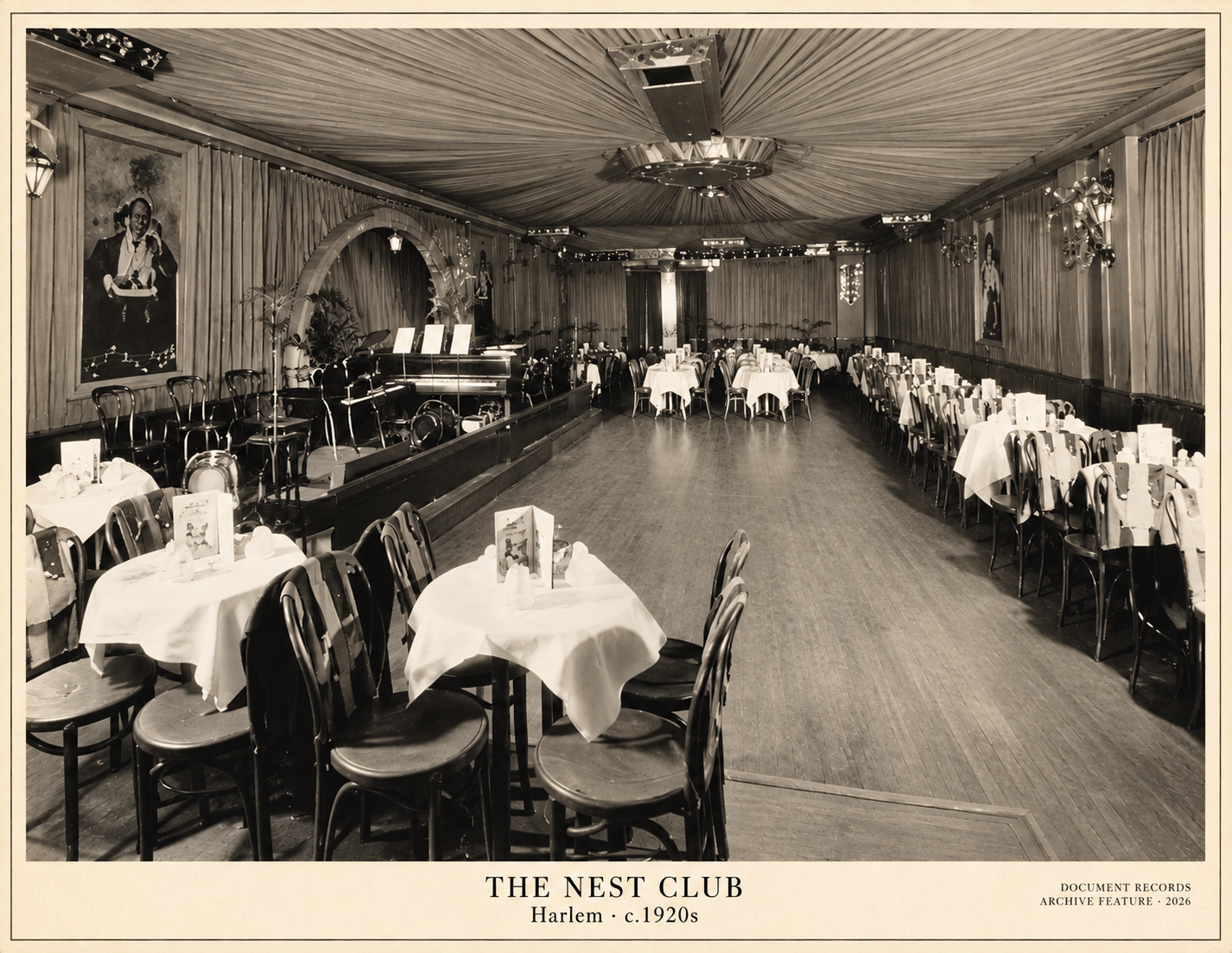
The photograph above is not Club Bamville, and we have no evidence that Elizabeth performed at the Nest. We include it because it gives a rare visual impression of the sort of Harlem nightclub environment in which she was working.
The surviving image available to us was extremely small, so we used AI-assisted image processing to make it usable here. The intention was to preserve the original composition and atmosphere, not to invent a different historical scene. Nevertheless, tiny details — faces, furniture, pictures on walls and other features that could not be resolved in the source — may have been reconstructed by the software. They should not be treated as documentary evidence.
Sixteen days after The New Yorker placed Elizabeth at Bamville, she was back at Victor.
And this time she brought Sidney Easton with her.
Sidney Easton and two extraordinary duets
On 18 October 1926, Elizabeth Smith and Sidney Easton recorded two vocal duets: When My Wants Run Out and Talk ’Bout Somethin’ That’s Gwine To Happen. Both were issued on Victor 20334.
The recording information gives Phil Worde on piano and Bobby Leecan on guitar. So Worde, who had composed the music for Gwine Have Bad Luck For Seven Years, was now physically accompanying Elizabeth in the studio six weeks later.
Listening to these records was one of the moments when our idea of Elizabeth really began to change.
When My Wants Run Out is tremendous fun. Elizabeth sings sweetly while Easton talks and sings around her, and the whole performance develops into the sort of male-female musical sparring familiar from Black vaudeville. Bobby Leecan’s guitar work underneath them is superb. Talk ’Bout Somethin’ That’s Gwine To Happen lets Elizabeth sound rather more bluesy, but again there is humour, character and interplay.
They reminded us strongly of the knockabout quality of Butterbeans and Susie — not because Elizabeth and Easton were copying them, but because the records inhabit a similar theatrical world of musical dialogue, comic grievance and verbal give-and-take.
Calling these performances simply “vocal duets” somehow doesn’t quite do them justice.
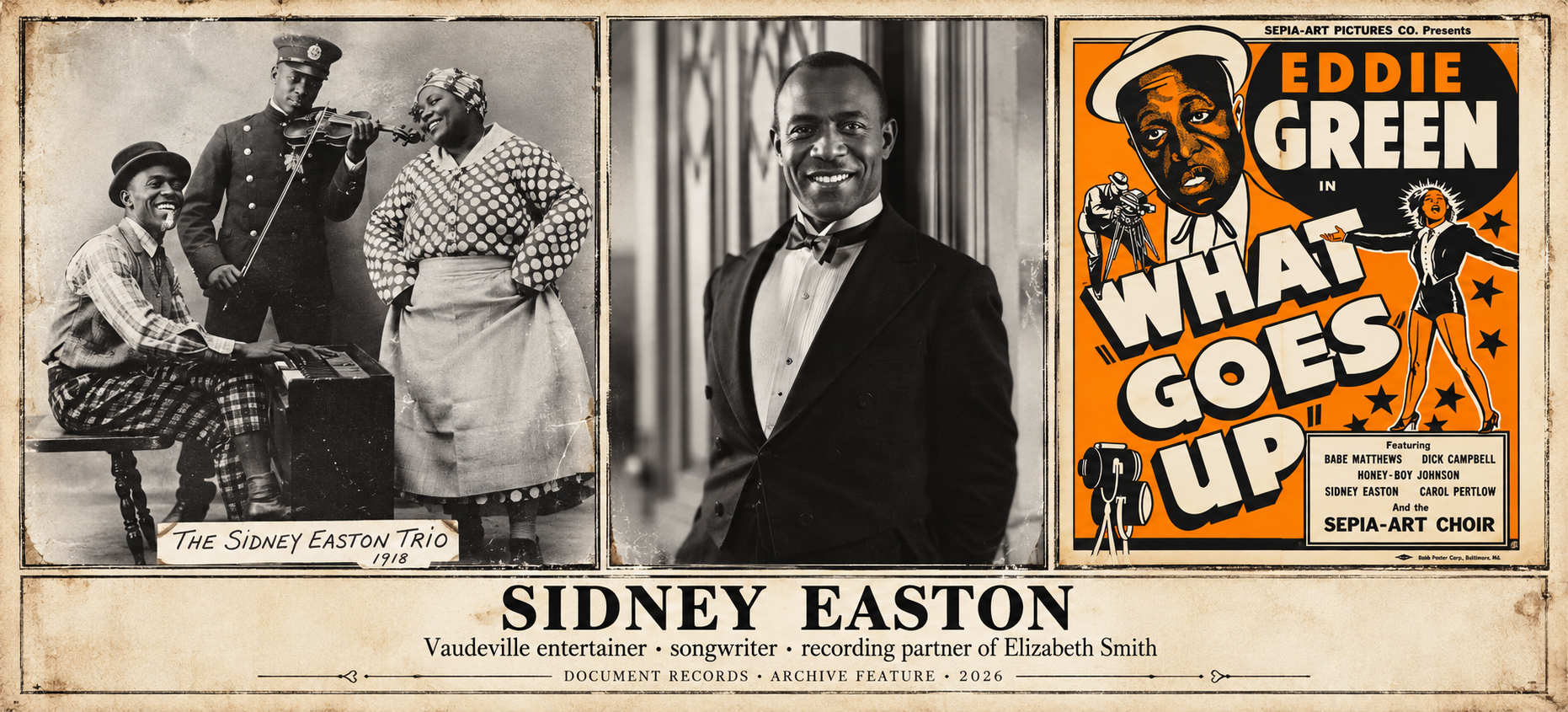
Easton himself had an extraordinary career. The surviving Sidney Easton papers at the Schomburg Center document a life in show business stretching from circus and minstrel work through vaudeville, songwriting, comedy acts and later stage and screen work. His archive even contains a substantial unpublished autobiography.
That makes Elizabeth’s association with him particularly suggestive. It doesn’t prove that she followed precisely the same career path, but it places her beside an experienced professional entertainer whose world extended far beyond making blues records.
Perhaps that is the better question to ask about Elizabeth Smith. Not: why doesn’t this blues singer always sound like a blues singer?
But: what if Elizabeth Smith was a Harlem nightclub and vaudeville entertainer who happened to make blues records?
We cannot yet prove that proposition as biography. But the ukulele performance, the comic delivery of Gwine, the Club Bamville appearance and the extraordinary Easton duets all make it worth considering.
Five Victor recordings — and two intriguing possibilities
Elizabeth returned to Victor once more on 26 January 1927 to record Police Done Tore My Playhouse Down. It was issued on Victor 21539.
That gives us five recordings securely documented under Elizabeth Smith’s name on Victor:
| Date | Recording | Issue |
|---|---|---|
| 6 September 1926 | No Sooner | Victor 20297 |
| 6 September 1926 | Gwine Have Bad Luck For Seven Years | Victor 20297 |
| 18 October 1926 | When My Wants Run Out — with Sidney Easton | Victor 20334 |
| 18 October 1926 | Talk ’Bout Somethin’ That’s Gwine To Happen — with Sidney Easton | Victor 20334 |
| 26 January 1927 | Police Done Tore My Playhouse Down | Victor 21539 |
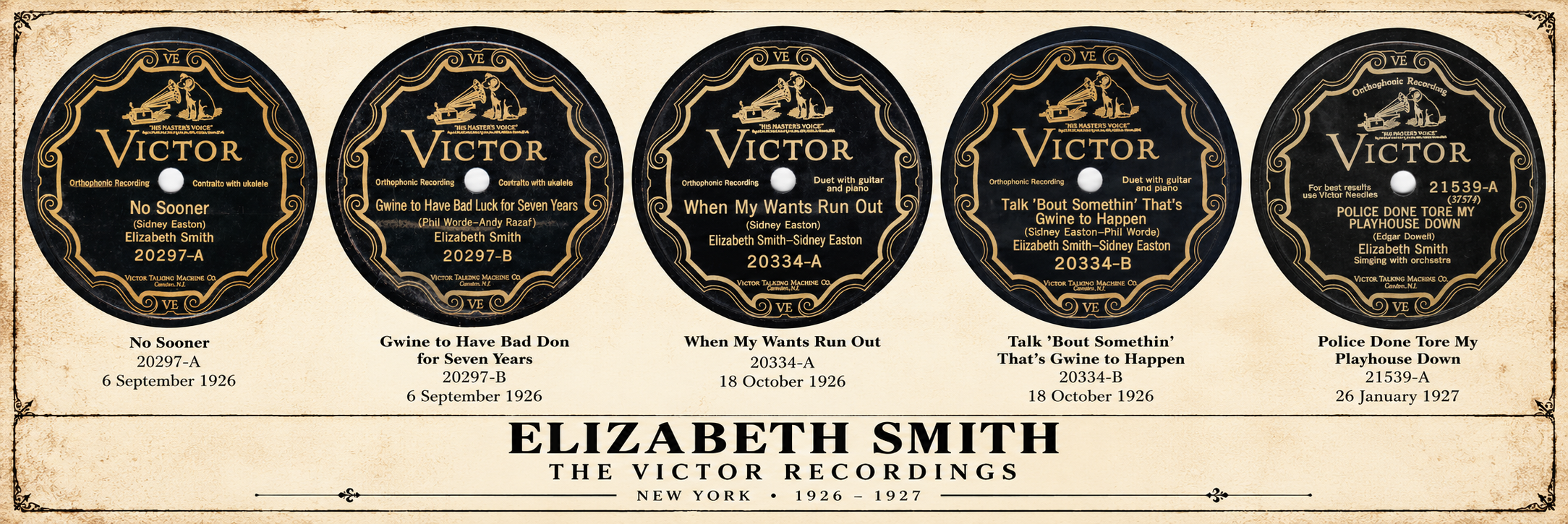
There may be two more.
Older blues discographies have long raised the possibility that the late-1926 recordings Somebody’s Been Loving My Baby and Harlem Blues, associated on issued records with names including Mandy Lee, may actually be Elizabeth Smith. Modern discographical databases continue to carry the Elizabeth Smith attribution, but importantly, the identification is not confirmed.
That distinction changes the way we think the discography should be presented. Rather than quietly turning an old discographical possibility into fact, we prefer to leave Elizabeth with five secure Victor performances and two possible additional recordings.
Perhaps one day another advertisement, theatre programme, newspaper report, copyright entry or forgotten archive will settle the question.
That is, after all, how people like Elizabeth Smith gradually come back into view.
Back to the broken looking glass
And so we return to that broken mirror.
We still don’t know when Elizabeth Smith was born. We don’t know when she died. We don’t yet know where she came from, how long she had been performing before Victor recorded her, or what became of her after January 1927.
But we know considerably more than we did when we first put the record on.
We know that in September 1926 she could walk into a Victor studio, accompany herself on ukulele and then turn around and perform a wonderfully comic blues by Andy Razaf and Phil Worde. We know that Mike Jackson was reported to have helped bring her to Victor. We know that within weeks she was appearing at Club Bamville in Harlem. We know that she returned to Victor with the veteran entertainer Sidney Easton and made two performances that sound far closer to knockabout vaudeville than the conventional image of a solitary blues singer.
And we know that, a hundred years later, she can still make us laugh.
That may be the loveliest thing about Gwine Have Bad Luck For Seven Years. The song is ostensibly about disaster: broken mirrors, troublesome children, uncooperative hens, the unlucky thirteenth row and an unforgiving landlord. But Elizabeth’s performance refuses to be miserable. She turns bad luck into entertainment.
For a woman who disappeared so thoroughly from the historical record, that voice has proved remarkably difficult to kill off.
And this Halloween, we’ve put it back on the jukebox.
Find Elizabeth Smith and Sidney Easton on Document Records
Recordings by Elizabeth Smith and Sidney Easton can be found across a number of Document Records and Blue Century Records releases. The albums below preserve different parts of the story — from Elizabeth’s Victor recordings and her duets with Sidney Easton to the Halloween collection that sent us looking for her in the first place.
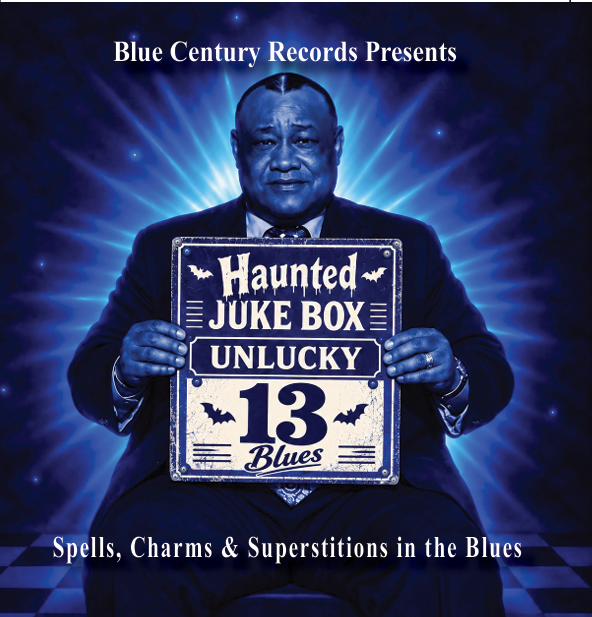
Blue Century Records presents – Unlucky 13 Blues: Bad Luck & Superstitions in the Blues
Featuring Elizabeth Smith’s Gwine Have Bad Luck For Seven Years.

Female Blues – The Remaining Titles (1922–1927)
JPCD-1526-2
Includes Elizabeth Smith’s No Sooner, Gwine To Have Bad Luck For Seven Years and Police Done Tore My Playhouse Down.

Leecan & Cooksey – Complete Recorded Works 1924–1928 Vol. 1 (1924–1927)
DOCD-5279
Includes the Elizabeth Smith and Sidney Easton recordings associated with Bobby Leecan.

Martha Copeland – Complete Recorded Works 1923–1928 Vol. 1 (1923–1927)
DOCD-5372
Included here for its connection with Sidney Easton’s wider recording world rather than as an Elizabeth Smith release.
Click any cover to explore the album and full track listing.
Sources and Further Reading
The principal discographical sources consulted for this article include the Discography of American Historical Recordings, Victor recording documentation, Brian Rust’s discographical work and later specialist discographical research.
For the later sessions and the question of the possible Mandy Lee recordings, we have also consulted specialist blues and jazz discographies that preserve the distinction between a suspected attribution and an established Elizabeth Smith recording.
The contemporary evidence for Elizabeth’s Harlem nightclub work comes from The New Yorker, 2 October 1926, which names Elizabeth Smith among the entertainers appearing at Club Bamville, 65 West 129th Street.
Personnel research for the September Victor session was also compared with the Harlem-Fuss discographical project, particularly its reassessment of the clarinet part traditionally attributed to Bob Fuller.
Sidney Easton’s surviving papers at the Schomburg Center for Research in Black Culture have been particularly valuable in establishing the breadth of Easton’s career and the professional entertainment world in which Elizabeth briefly appears.
As always with artists whose lives were poorly documented, this remains work in progress. If further contemporary evidence about Elizabeth Smith comes to light, we would be delighted to hear about it.
Research and Article Preparation
Research compiled by Gillian Atkinson, with additional research, fact-checking and editorial assistance from Mavis Chatsworth, her AI research and writing assistant.
The historical research for this article has been drawn from the discographical, archival and contemporary material cited above, together with Document Records’ own discographical knowledge and research gathered specifically for this feature.
We believe in being open about our use of AI. It does not replace original research, historical sources or human judgement. We use it as a research and editorial tool: to help investigate and cross-check information, organise substantial amounts of material, and present detailed music history in a clear and accessible form.
This is particularly valuable to us because Document Records has always had an international audience. We want serious historical research to remain responsible while also being readable and accessible to people of different ages, backgrounds and levels of English.
The research, selection of material and final editorial decisions remain ours. Where a fact cannot be satisfactorily established, we would rather say so than allow AI — or indeed any secondary source — to turn uncertainty into fact.
Article prepared for Document Records / Blue Century Records by Gillian Atkinson with research and editorial assistance from Mavis Chatsworth, her AI research and writing partner.