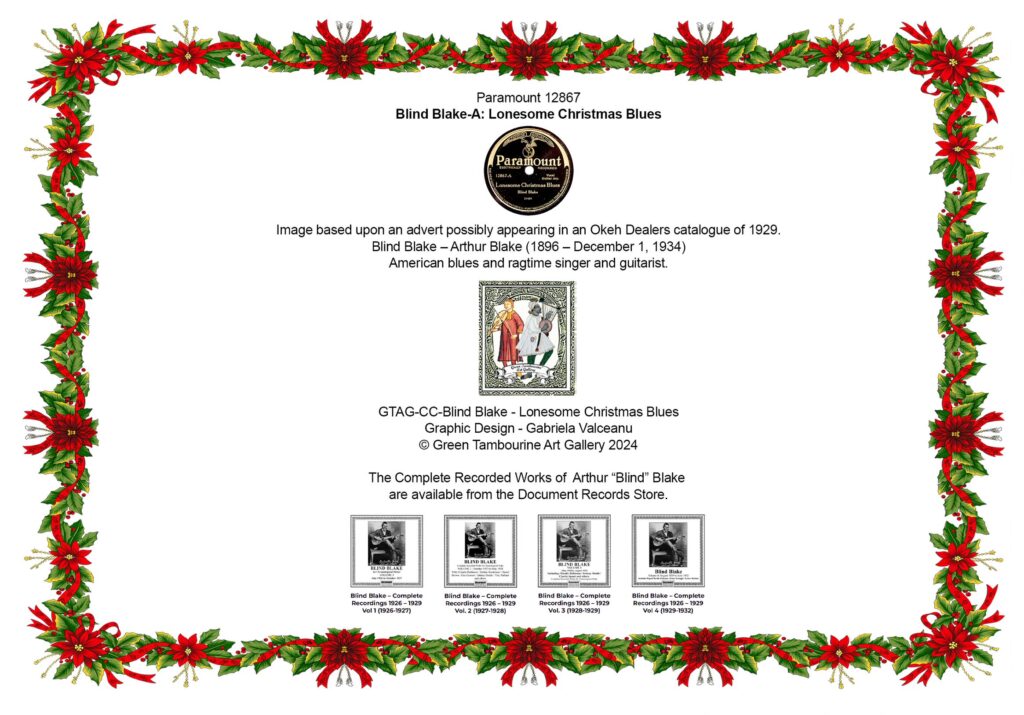
Blind Blake, often hailed as the “King of Ragtime Guitar,” remains one of the most significant yet enigmatic figures of early American blues and ragtime music. His innovative guitar techniques, dazzling fingerpicking, and ability to blend humour with poignant storytelling set him apart as a true pioneer. While much about his life remains shrouded in mystery, his prolific recording career with Paramount Records between 1926 and 1932 provides a rich tapestry through which to explore his legacy. Here, we examine Blind Blake’s life and artistry through the lens of his recordings, offering a unique perspective on his contributions to American music history.
Early Life and Path to Paramount
Arthur “Blind” Blake’s early years are as elusive as the man himself. Research suggests he was born in Newport News, Virginia, to Winter and Alice Blake, though definitive documentation remains scarce. Whether born blind or losing his sight early in life, Blake faced the hardships common to disabled individuals in early 20th-century America. Busking on street corners and improvising his repertoire, Blake honed his craft as a traveling musician, performing across cities like Atlanta, Detroit, and Jacksonville. Jacksonville, in particular, became a key hub for his artistry, blending the diverse influences that would later define his music.
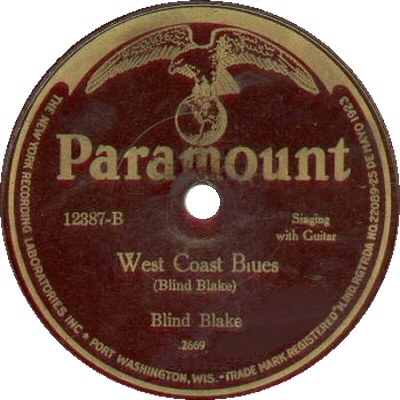
Blake’s prodigious talent eventually caught the attention of Paramount Records, a subsidiary of the Wisconsin Chair Company. Paramount, which specialized in “race records” targeted at African American audiences, became the home for Blake’s groundbreaking recordings. His 1926 debut instrumental, “West Coast Blues,” was an instant success, showcasing his intricate ragtime style and charismatic personality. The track, featuring lively guitar licks and Blake’s infectious humour, quickly became a standard for aspiring guitarists across the South.
The Paramount Years (1926–1932)
Blind Blake’s time with Paramount was marked by extraordinary creativity and productivity. Over six years, he recorded nearly 80 tracks, encompassing a wide range of styles, from jaunty ragtime instrumentals to melancholic blues ballads. His versatility as a guitarist, lyricist, and performer shines through in recordings like “Southern Rag,” “Too Tight Blues,” and “Rope Stretching Blues.”
Signature Tracks
“West Coast Blues“: This instrumental masterpiece solidified Blake’s reputation as a virtuoso guitarist. His light, playful touch and precise fingerpicking inspired generations of musicians, including Reverend Gary Davis and Robert Lockwood Jr.
“Diddie Wah Diddie“: A hallmark of Blake’s foray into hokum music, this track is brimming with innuendo and humour, capturing the lively spirit of Bronzeville’s dance halls and clubs.
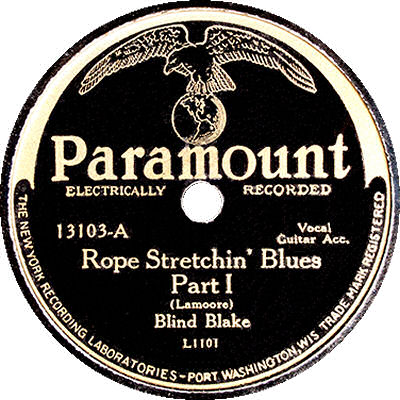
“Rope Stretching Blues“: A chilling narrative of crime and punishment, this song showcases Blake’s ability to juxtapose dark themes with his charming musical delivery.
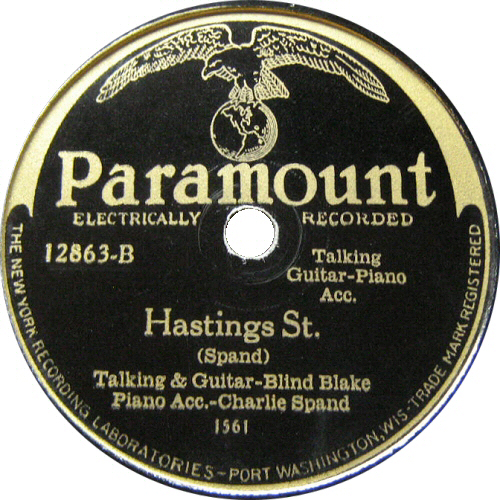
“Hastings Street“: In collaboration with Detroit piano legend Charlie Spand, Blake’s guitar provides a perfect counterpoint to Spand’s rolling piano, immortalizing Detroit’s vibrant red-light district.
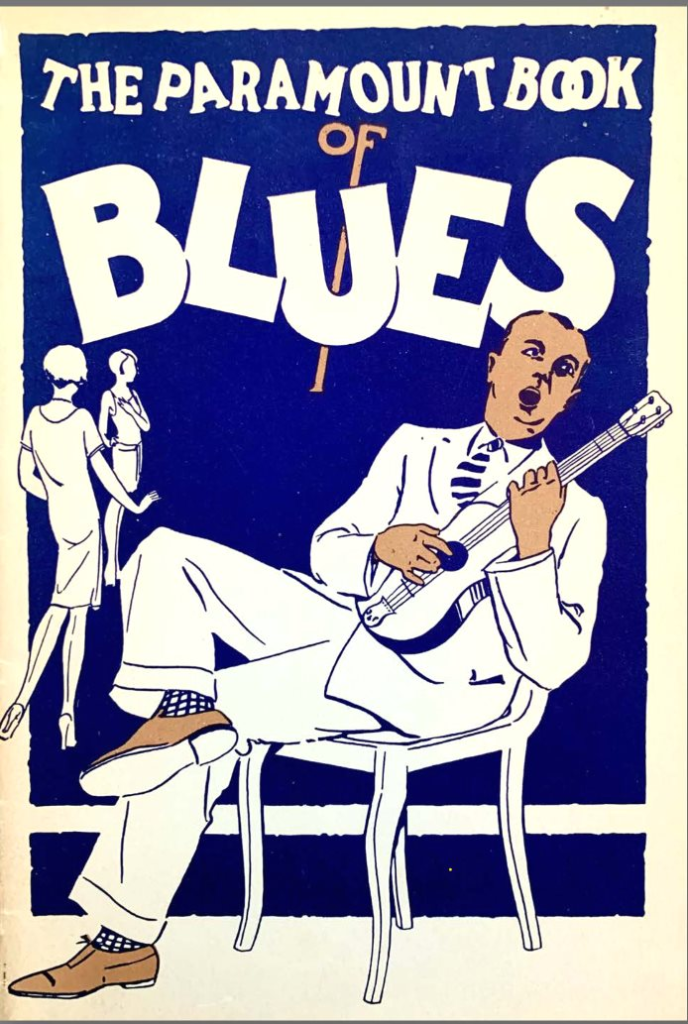
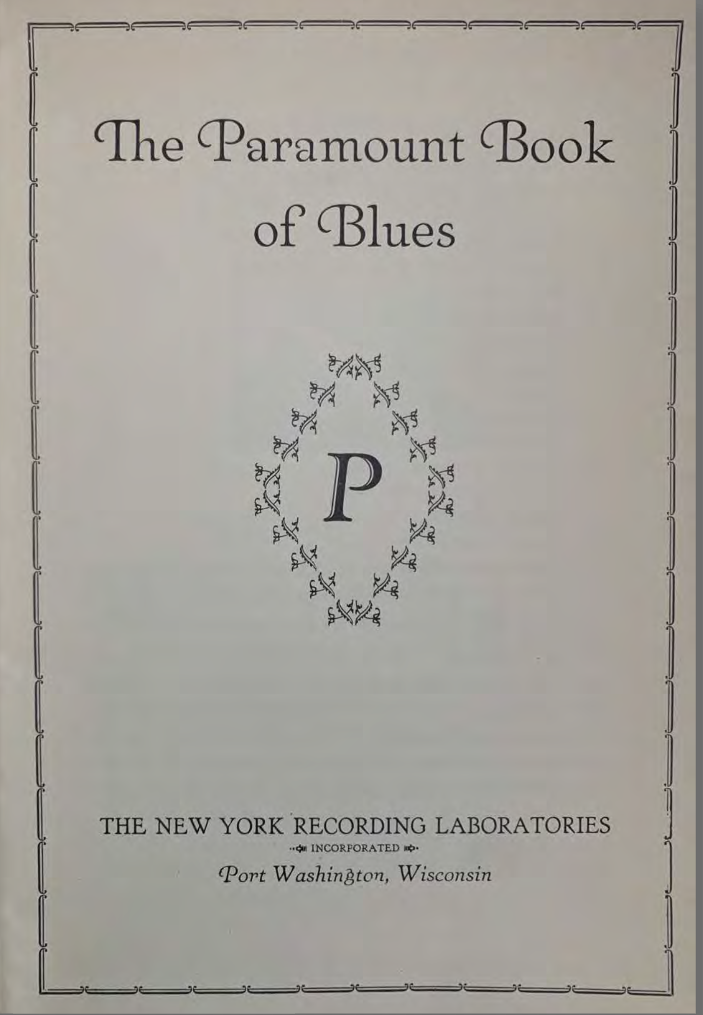
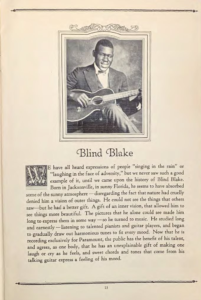
Paramount’s recording sessions took Blake from Chicago to Grafton, Wisconsin, where the company operated its pressing plant. He became a key figure in Paramount’s promotion machine, appearing in advertisements, songbooks, and even biographical sketches. The Paramount Book of Blues (1927) described him as possessing “a gift of inner vision” that allowed him to create “things more beautiful” than most could imagine.
Musical Innovations and Legacy
Blind Blake’s recordings remain a treasure trove of musical innovation. His guitar work, often compared to the intricacies of a ragtime piano, introduced techniques that continue to challenge and inspire musicians. Tracks like “Southern Rag” feature off-centre bass lines and rhythm patterns reminiscent of African traditions, hinting at the deep cultural roots of his artistry.
Even as the Great Depression forced Paramount to close its doors in 1932, Blake’s influence endured. His music crossed regional boundaries, earning admiration from the Mississippi Delta to the Carolinas. Fellow blues artist Robert Lockwood Jr. fondly recalled Blake as his musical idol, and many contemporary guitarists continue to study Blake’s recordings to unlock the secrets of his style.
A Life Cut Short
Blind Blake’s final years were marked by hardship. Following Paramount’s collapse, he settled in Milwaukee, where he lived with his wife, Beatrice. The economic devastation of the Great Depression left him unemployed, and his health deteriorated. Blake succumbed to tuberculosis in 1934 at the age of 38, a tragic end for a man whose music brought so much joy.
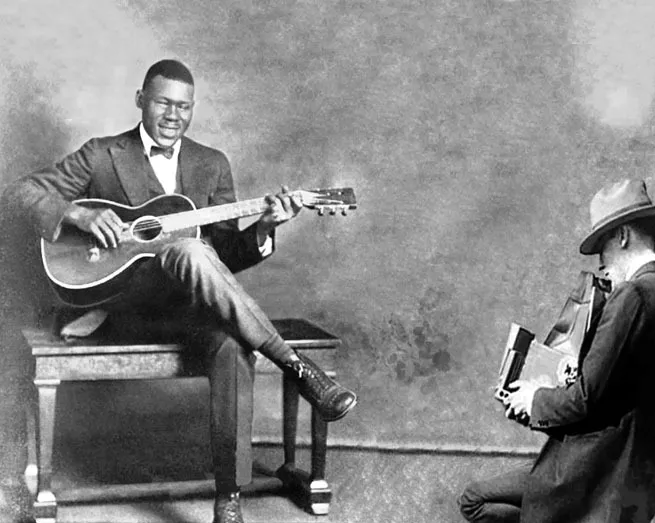
For decades, his burial site remained unmarked and his life story fragmented. Thanks to dedicated researchers, Blake’s contributions have been rediscovered and celebrated. In 2012, his grave in Milwaukee’s Glen Oaks Cemetery was finally given a headstone, featuring the same smiling portrait that graced Paramount’s advertisements nearly a century ago.
Documenting the Legacy
Blind Blake’s recordings are a cornerstone of American musical heritage, and their preservation is essential. At Document Records, we take pride in curating and sharing the works of artists like Blake, ensuring their voices continue to resonate. His recordings capture not only his virtuosity but also the cultural and historical moments that shaped them. For fans and scholars alike, they offer a window into the vibrant world of early blues and ragtime.
Blind Blake’s music remains as vibrant and captivating today as it was nearly a century ago. As we revisit his recordings, we celebrate not just the artist, but the enduring spirit of creativity and resilience that defines the blues.
Authored by: Gillian Atkinson from Document Records
Graphics by: Gabriela Teodora Vâlceanu
This website uses cookies to improve your experience. We'll assume you're ok with this, but you can opt-out if you wish. Cookie settingsACCEPT
Privacy & Cookies Policy
This website uses cookies to improve your experience while you navigate through the website. Out of these cookies, the cookies that are categorized as necessary are stored on your browser as they are essential for the working of basic functionalities of the website. We also use third-party cookies that help us analyze and understand how you use this website. These cookies will be stored in your browser only with your consent. You also have the option to opt-out of these cookies. But opting out of some of these cookies may have an effect on your browsing experience.
Necessary cookies are absolutely essential for the website to function properly. This category only includes cookies that ensures basic functionalities and security features of the website. These cookies do not store any personal information.
Any cookies that may not be particularly necessary for the website to function and is used specifically to collect user personal data via analytics, ads, other embedded contents are termed as non-necessary cookies. It is mandatory to procure user consent prior to running these cookies on your website.