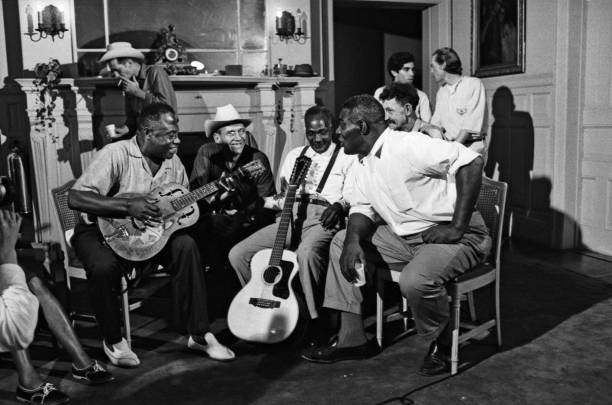
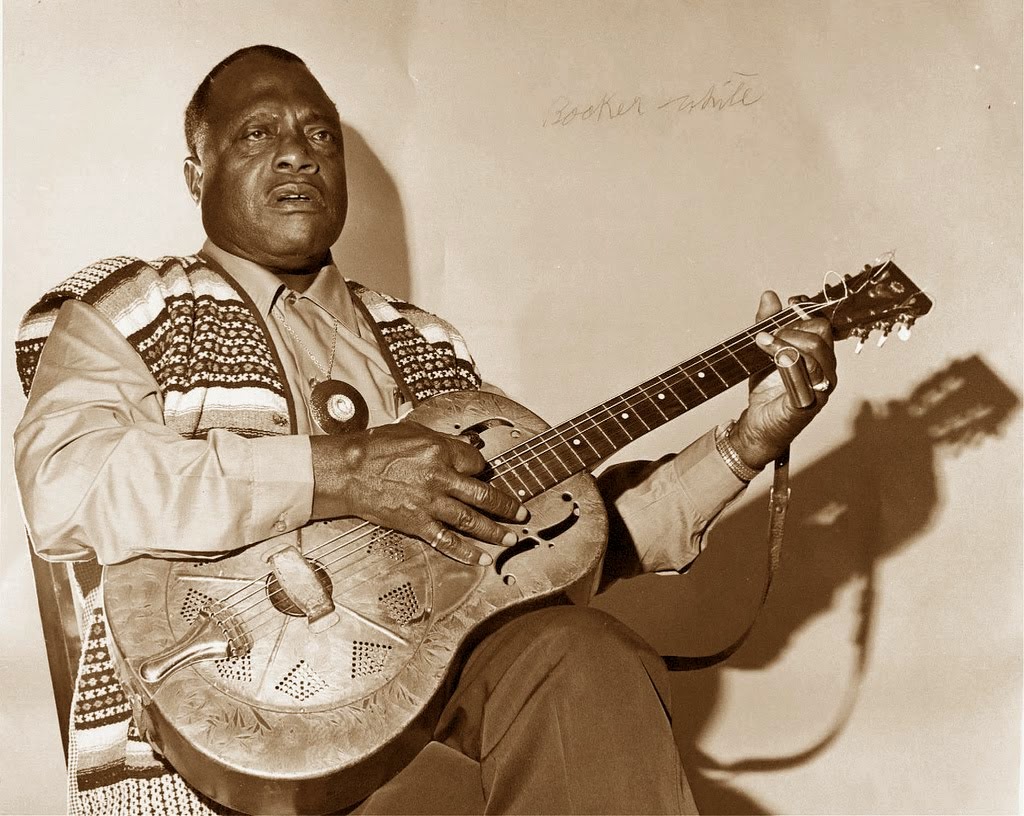
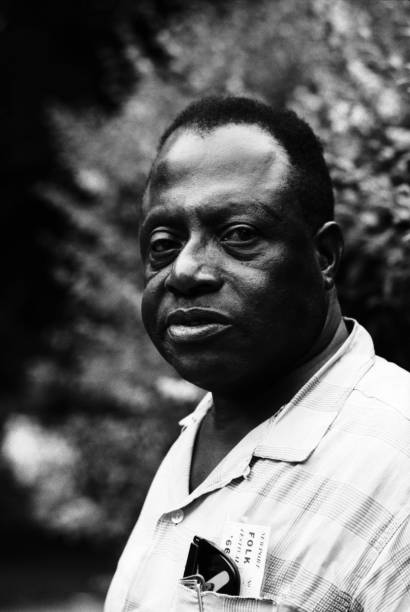
Booker T. Washington Bukka White’s life story is as riveting as the music he created, a narrative filled with hardship, resilience, and an unyielding devotion to the Delta blues. Born on November 12, 1906, in north-eastern Mississippi, Bukka’s journey through the world of music captures the essence of the early blues, while offering a deeply personal window into the struggles and triumphs of African American life in the 20th century.
Bukka White’s Early Recordings
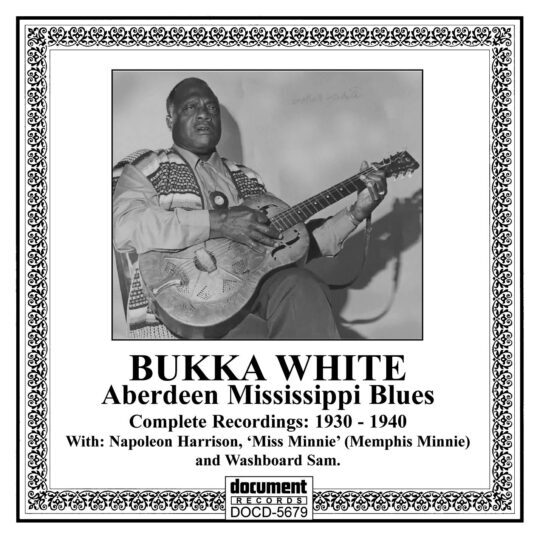
For fans of early blues, Bukka White’s pre-war recordings are an essential part of his story. The collection Bukka White: Aberdeen Mississippi Blues – Complete Recordings (1930- 1940) offers a comprehensive look at his formative years, featuring standout tracks like Jitterbug Swing, The Panama Limited, and Good Gin Blues. These recordings capture the raw energy and storytelling brilliance that defined Bukka’s early career. Available in CD, MP3, and FLAC formats, this collection is a must-have for anyone seeking to explore the roots of the blues.
Early Life and Musical Beginnings
Stefan Wirz informs us that his real name: Booker T. (Taliaferro) Washington White/k/Big Daddy” is a transliteration of his given name (first used on the 1937/1940 Vocalion and OKeh labels) that he reportedly never liked but became the best-known. Born: November 12, 1904, near Houston, Chickasaw County, Mississippi Died: February 26, 1977, at City of Memphis Hospital in Memphis, Tennessee Buried: New Park Cemetery in Memphis, TN.
Named after the great African American educator Booker T. Washington, Bukka White was immersed in music from an early age. His father, John White, a railroad worker and musician, introduced him to a range of instruments, gifting Bukka his first guitar at the age of nine. By his teenage years, Bukka had begun performing at square dances, and his talent quickly drew attention.
Early Recordings
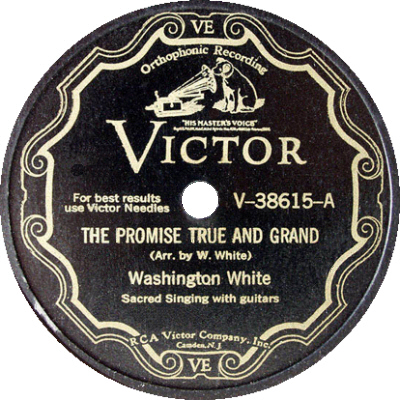
Bukka’s first recording session took place in Memphis May 26, 1930, in Memphis, TN by Ralph Peer; Washington White, Miss Minnie arranged by talent scout Ralph Lembo. These early recordings, a mix of country blues and gospel, were released under the name Washington White. Though only a handful of tracks were initially published, they showcased Bukka’s unique style, blending percussive picking with bottleneck slide guitar.
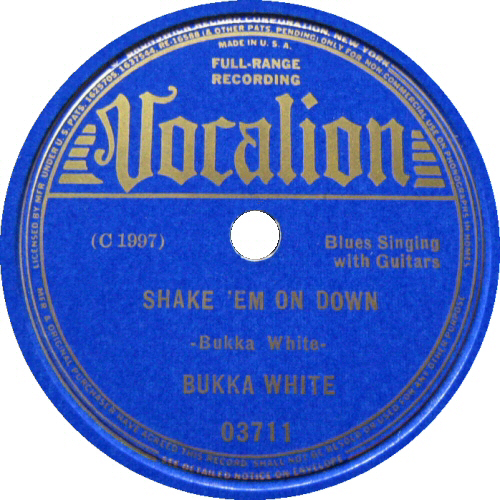
Lost and unissued Recordings However, the heartbreak is the following were cut but were unissued “Washington White – The Doctor Blues (59997-2) – Mississippi Milk Blues (59998-2) – Women Shootin’ Blues (59999-2) – Mule Lopin Blues (60000-2) – Stranger Woman Blues (60001-2) * – Jealous Man Blues (62502-2) * – Mama Ain’t Goin To Have It Here (62503-2) * – Dirty Mistreatin Blues (62504-2) * – Over Yonder (62505-2) – Trusting In My Saviour (62507-2) rec. May 26, 1930, in Memphis, TN by Ralph Peer; Washington White, Napoleon Hairiston, Larry Cohn: The unreleased material has never surfaced and it is generally accepted that the metal parts have been destroyed. Next he recorded for Vocalion in – . September 2, 1937 1937, Chicago, IL; Bukka White, Pine bluff Arkansas and Shake Em On Down remain iconic examples of his raw, rhythmic sound.
The Impact of Parchman Farm
In 1937, Bukka White’s life took a dramatic turn when he was convicted of shooting a man and sentenced to Mississippi State Penitentiary, commonly known as Parchman Farm. While imprisoned, Bukka continued to write and perform music, turning his experiences into poignant songs that captured the harsh realities of incarceration. Tracks like Parchman Farm Blues and Fixin’ to Die Blue became defining works, blending haunting narratives with his masterful guitar playing.
Folklorist John Lomax visited Parchman in 1939 and recorded Bukka for the Library of Congress. Although reluctant at first, Bukka allowed Lomax to document his songs,
including Po’and Em Dogs On Washington (Barrelhouse) White
RECORDERED: May 23, 1939 in Camp No. 10 State Penitentiary, Parchman, MS by Alan Lomax; Bukka White. However, due to issues with the machine they were recorded with wrong speed ! Library of Congress (unissued) Gary Atkinson the Document Records MD was and is a huge fan of Bukka White and we have another interesting story to tell you about all that in the New Year. Gary set about trying to correct the speed and all agree he did a sterling job as you can here on our CD
Post-Prison Career and Wartime Years
Released from prison in 1940, Bukka returned to the studio with Washboard Sam with producer Lester Melrose in Chicago. This session produced twelve tracks, including some of his most memorable songs: – Special Stream Line, Jitterbug Swing and Aberdeen Mississippi Blues
When Can I Change My Clothes, Sleepy Man Blues, and District Attorney Blues. These songs offered a window into his personal struggles and resilience, addressing themes of identity, systemic oppression, and emotional fatigue.
The 1940s and 1950s were quieter years for Bukka musically. He relocated to Memphis, where he worked in manufacturing while continuing to play small gigs. During this period, he mentored his young cousin B.B. King, helping to shape the future of blues music.
Revival and Rediscovery
Bukka White’s music experienced a renaissance during the American folk blues revival of the late 1950s and 1960s. His song to Die Blues was featured on the influential album The Country Blues by Samuel Charters. Bob Dylan’s cover of the track in 1962 further reignited interest in Bukka’s work.
In 1963, guitarist John Fahey and his friend Ed Denson tracked Bukka down by sending a postcard addressed to Bukka White (Old Blues Singer), c/o General Delivery, Aberdeen, Mississipp This chance connection led to a series of new recordings and performances, including the album Mississippi Blues: Bukka White released on Takoma Records. Bukka’s live performances captivated audiences, and he became a fixture on the folk festival circuit, touring extensively across North America and Europe.
Legacy and Influence
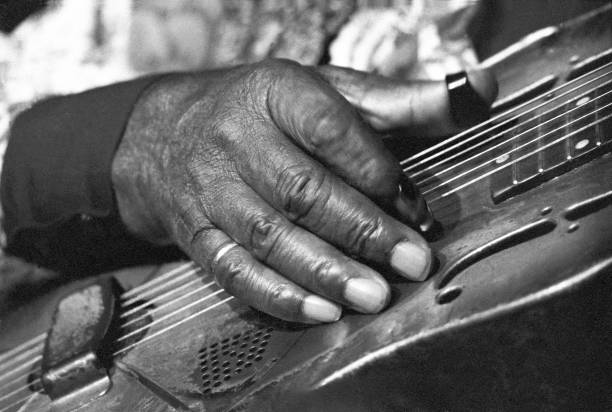
Bukka White’s contributions to music extend far beyond his recordings. His distinctive bottleneck slide guitar technique, paired with his deeply emotive vocal delivery, has influenced generations of musicians. Tracks like "Shake Em On Down; and Aberdeen Mississippi Blues have been covered by artists such as Led Zeppelin, Bob Dylan, and Jeff Buckley, ensuring his legacy endures.
In recognition of his impact, Bukka White was posthumously inducted into the Blues Hall of Fame in 1990, and his song to Die Blue was added to the Grammy Hall of Fame in 2012. A Mississippi Blues Trail marker now honors his life and music in his hometown of Houston, Mississippi.
Conclusion
Bukka White’s life and music embody the spirit of the Delta blues. From his early recordings to his later rediscovery during the folk revival, his artistry continues to resonate, telling stories of hardship, hope, and resilience. His work remains a testament to the enduring power of music to document the human experience. You can read the full story here
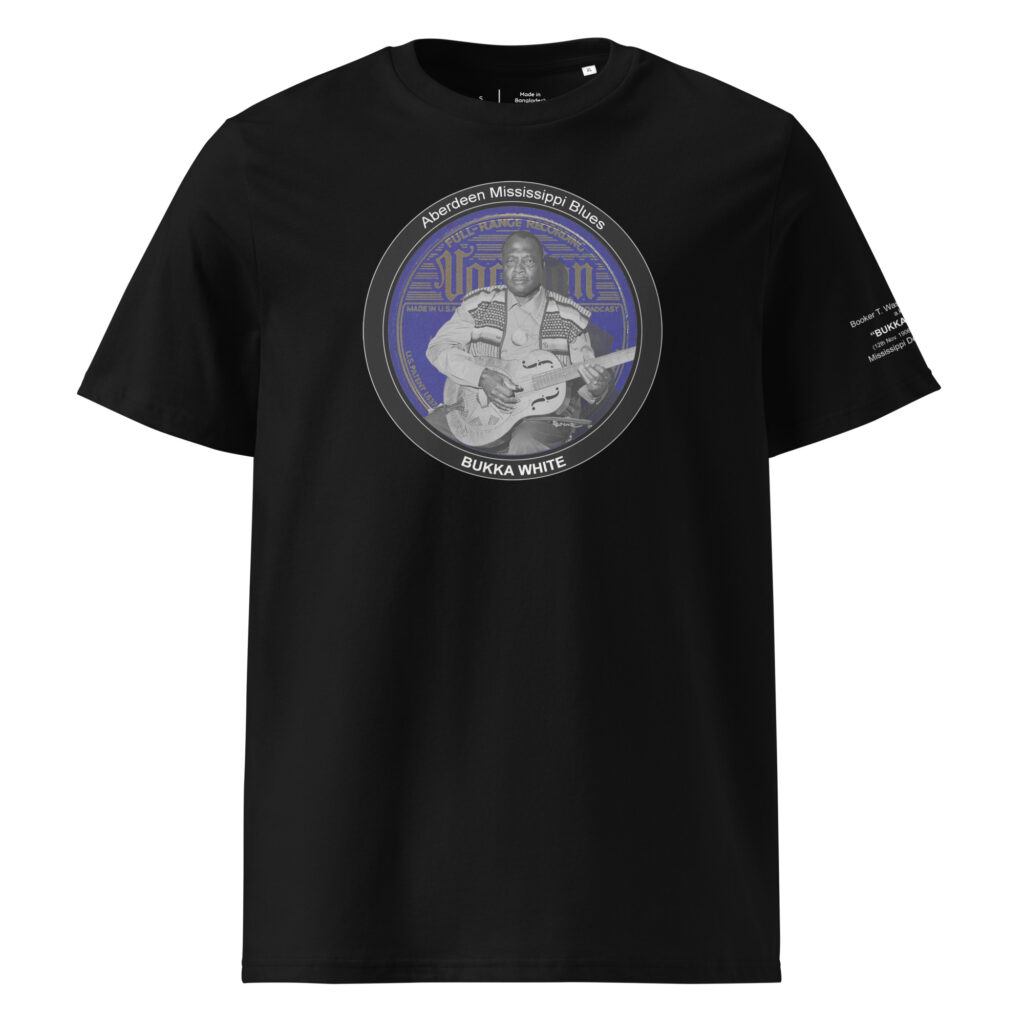
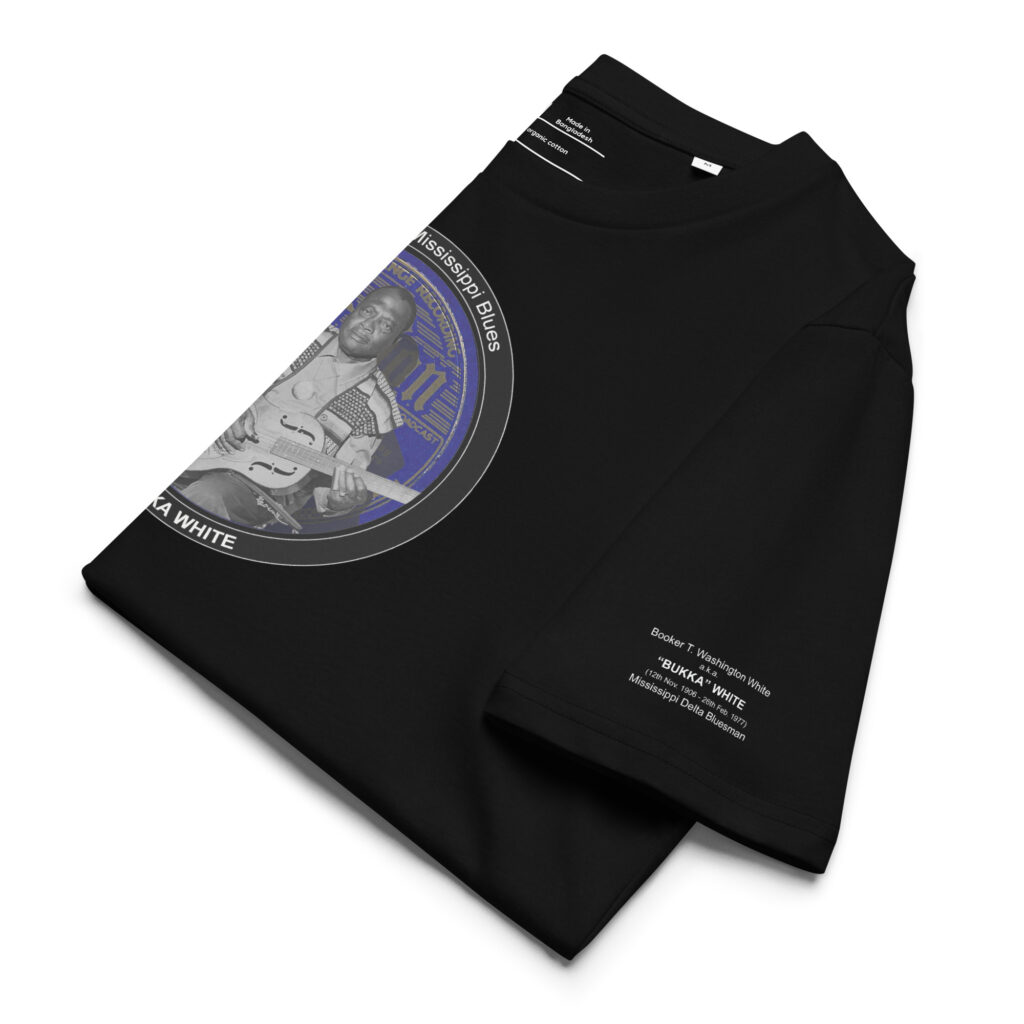
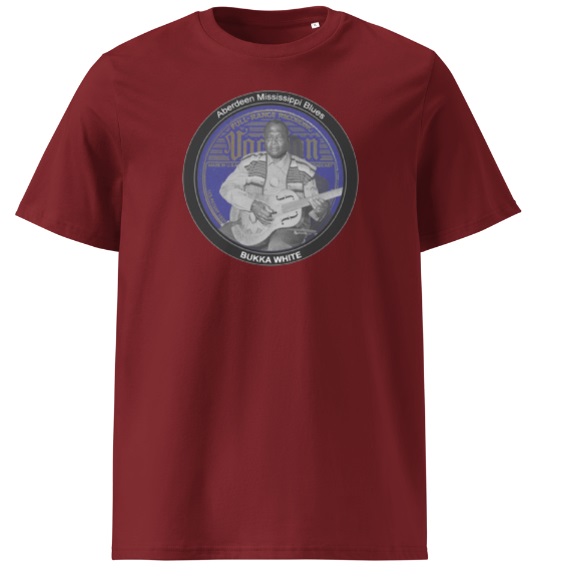
CELEBRATE BUKKA WHITE WITH A T-SHIRT!
READ AN INTERVIEW WITH BUKKA WHITE
This website uses cookies to improve your experience. We'll assume you're ok with this, but you can opt-out if you wish. Cookie settingsACCEPT
Privacy & Cookies Policy
This website uses cookies to improve your experience while you navigate through the website. Out of these cookies, the cookies that are categorized as necessary are stored on your browser as they are essential for the working of basic functionalities of the website. We also use third-party cookies that help us analyze and understand how you use this website. These cookies will be stored in your browser only with your consent. You also have the option to opt-out of these cookies. But opting out of some of these cookies may have an effect on your browsing experience.
Necessary cookies are absolutely essential for the website to function properly. This category only includes cookies that ensures basic functionalities and security features of the website. These cookies do not store any personal information.
Any cookies that may not be particularly necessary for the website to function and is used specifically to collect user personal data via analytics, ads, other embedded contents are termed as non-necessary cookies. It is mandatory to procure user consent prior to running these cookies on your website.